
An Open World Story
The open world game has been a gaming establishment for over a decade now, with the market being flooded with games from jungle shooting to building jumping, infinite galaxies to just one city centre. With this wide range of settings, open world games are rarely applauded for their stories and I think this is ultimately their biggest weakness. For games with supposedly hundreds of hours of content, so much of that means nothing for the characters, and that is almost entirely the players fault.
I’m going to use Watch_Dogs as my example here because firstly I want to and secondly it helps me prove my point. For several missions in Watch_Dogs you are tracking down your kidnapped sister Nicole, yet you can just go off and take part in any of the game's side missions in between. The plot loses its sense of urgency and seriousness - something that you can’t say Watch_Dogs didn’t have in spades - because instead of tracking down my sister I’m playing chess in the park.
Player agency in open worlds will normally always break the flow of the main story because those stories tend to be designed for continuous play, where each mission end leads right into the next mission’s start. Players don’t necessarily want to do that though, particularly in gloom-fests like Watch_Dogs, and so you end up with this weird dissonance where the plot pauses so the player can go around trashing cars and downing drinks.
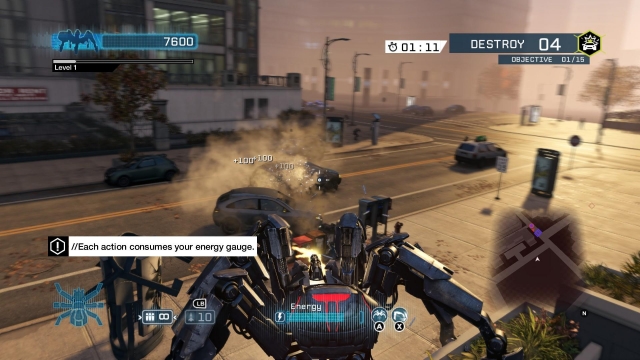
The best part of Watch_Dogs
I, therefore, suggest a change is in order. Instead of having a long seven or eight hour plot with a single story, why not have several one or two hour stories that develop relationships with side characters better. That way, you can play one story and then move on to messing around with the open world, the dissonance disappears and you get better characters and less laboured stories. You can even stick a conclusion story that brings together the characters and stories of the game so far on the end to give the players a sense of fulfillment and closure.
This would probably best affect an ensemble cast like an Avengers game, where each story mission could be an issue of a comic during a crossover event culminating in an event titled book that has the endgame in. Then you can just give the player the ability to swap between characters in the open world for them to mess around with and do side missions - though my comic book analogy falls down a little here I guess.
It’s not like this system doesn’t work, because we see it done with MMORPGs. In World of Warcraft for example, each area has its own story that connects to a few other places in the world to lead the players from one story to another, leading up to raids and dungeons and other end game content. Scaling this concept down to a single player experience, replacing the grinding fetch quests with whatever gameplay your game demands.
Then, at last, we can get down to what is really important: getting in another round of Gwent.


COMMENTS
Acelister - 12:09pm, 18th December 2016
Well put - except towards the end where it unravels into a card game. It is never a good idea to put a card game into your game. Or make a card game.
In this theoretical Avengers game, you could have different side missions open to different characters, and sticking with the comic book analogy they would be back up strips to the main book.