

Does Crystalis Hold Up?
Does It Hold Up is not a series about whether a game is good by today’s standards, but rather how close it was to getting things right, and what those things were. Which games innovated well for their time, and which games still hold up even in this day and age?
1990 Release Date

Over 40 years old now, the Nintendo Entertainment System has long been a piece of history. I’ve been trying to work through some of its library (mostly the titles available on Switch) to get a sense for those older games and to obsessively fill out a spreadsheet of games by year. Most have only taken up an hour or two of my time, but the now 35-year-old Crystalis was different. It took me a few months of on-and-off playing to get through it, but I stuck with it because there was just something special about it.
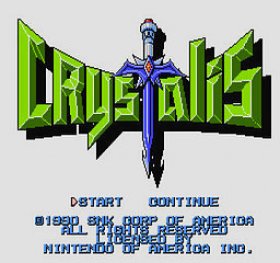
Developed by SNK and originally released on the 13th of April in 1990 Japan as God Slayer: Haruka Tenkū no Sonata before coming to North American shelves in July later that year, Crystalis is an early example of an action RPG taking inspiration from The Legend of Zelda, though it is by no means the first. The nameable protagonist wakes up 100 years or so after an apocalyptic event that has seemingly wiped technology from the world, and he must take up a sword, learn magic spells, and level up a lot if he wants to take down an evil empire.
Crystalis would see a port to the Game Boy Color 10 years on in 2000 with a different plot, a new soundtrack, and a number of gameplay differences. Miguel Lopez, writing for GameSpot, noted that the GBC version showed that the game was “still surprisingly relevant,” being “a testament to tight, polished RPG game design” that impressed them, even 10 years later on a handheld re-release. However, it was the original NES version that made its way into the SNK 40th Anniversary Collection in 2018. There, it held the honour as the latest game to be included.
How did it feel to play?

On the whole, I would describe the experience as oddly slow, not unlike an early Castlevania title, only top-down. The enemy monsters and their projectiles move quickly across the screen, to the point that a small handful of them can easily overwhelm you if you’re not careful. You, the player character, do not have this luxury of speed, with your only ranged options requiring careful time spent charging up your swords to shoot out various beams and other magical attacks. Sure, you could try to walk right up to them and start some close-up swordplay, but there’s a thin, blurry line between “close enough to stabby stab” and “close enough to get knocked around”, and it’s quite easy to find yourself on the wrong side of that line.
The slow combat against quick enemies took some getting used to, but it helps to sell how dangerous these monsters are, and it makes up for how the NES will only allow a handful of foes to be on the screen at a given time. Throw in a dozen enemies that can poison or petrify you if they land a hit and a good couple flying foes that swoop in even faster than the others with little warning, and you’ll find loads of situations where you have to be paying attention to the combat and reacting to what’s around you. With that, you can't simply settle into a rhythm to grind for a few hours.
However, while this makes getting from point A to point B interesting, when you do have to grind, it gets in the way — and you do have to grind. Most of the bosses, and some of the generic enemies too, can’t be damaged at all unless you’ve levelled up enough. Most of the wider locations, like the brightly-coloured outdoor spaces between dungeons, can be a little confusing to navigate without having a map on your real life computer, so you’ll naturally find yourself duking it out with plenty of monsters, but even then, you’ll have to hold yourself back and fight the same enemies on repeat, lest you wish to hear that dreaded “tink” that means your huge blast of fire magic has done nothing to the latest crab marching against you.
Frustratingly, some bosses and generic enemies are also simply immune to certain types of magic. You have four swords for most of Crystalis’ run(foryourlife)time, each representing a different element, so you’ll be required to switch between them on the fly, whether to test out which will even work or to face off against two enemies that are immune to each other’s weaknesses. This would be a fun challenge if switching between weapons (or any equipment you have on you) was quick and simple, but instead, you have to open your inventory and equip both the different sword you want to use and its corresponding magic bracelet/ball that lets you charge up your weapon to its second and third levels. Rather than making combat feel like a careful dance around your opponents, this type of slowness grinds the game to a halt.
As a side note, these four swords come with a special feature that I didn’t learn about until towards the end of the game that might have made this item-swapping process more bearable: once you’ve maxed out an element and obtained its magical bracelet, you no longer need to have that bracelet equipped in order to use the powerful second charged attack. It was still frustrating to have to manage my menus mid-battle (mostly since I was playing on a Switch with Joy-Con drift, though that’s not the NES game’s fault), but far less so, now that I only had to switch out one item.
Outside of these weapons, you can gather a wide assortment of items — both single-use, like basic healing items, and reusable equipment that can adjust your stats, make you immune to hazards, or even let you jump around like a mad man to hop over bottomless pits, minimise how long you’re standing on dangerous ground, or just have fun. There’s also magic you can learn that lets you do similar game-changing things at the cost of your mana pool, like healing, flying, and transforming into other characters. That last spell in particular can see a surprising amount of use, despite how it disables your ability to use your sword and how there are only four characters you can turn into.
A major part of Crystalis’ late game, like any good RPG, is the power fantasy. You can become roughly as invulnerable as your foes, fill the screen with deadly lightning, and fly over any threat. It’s sometimes a repetitive bore to reach that point, but once you’re there, the world is a joy to explore.
The story reaching that point is also quite detailed, impressively so for an NES title. I’ll say that it isn’t always the most exciting or interesting from a narrative perspective — at least compared to my current favourite NES plotline, Ninja Gaiden’s — but the heavy moments land hard, and Crystalis understands how to be a good adventure story above all. At first, it’s very “go here, then go there”, but the world fills in with interesting characters that connect to each other and make that travel feel more important. It can also get delightfully wacky. There are bunnies you use magic to speak with, people trying to resist an evil empire using the vestiges of apocalyptic science to subjugate the world, and secret underground tunnels that exist primarily to let a state leader masquerade as a fortune teller on the other side of town without anyone noticing.
Tying everything together is a soundtrack bursting with life, mixing sci-fi and fantasy aesthetics into a classic NES soundscape of adventure. I have heard the Plains and Inner Mountains themes on repeat so much that they had started to grate on me mid-grind, but even listening back to them now fills me with a sense of pluck and confidence that I can take down whatever comes my way. The Poison Swamp theme is delightfully eerie, featuring a repeated run that sounds like laughter made manifest in the background. I’ll admit that the music didn’t stick out in my mind as something to remember, but listening back to it while writing this effortlessly takes me back to the feelings of playing Crystalis and brings that world to life.
Does It Hold Up?

By today’s standards, Crystalis is rather clunky and can even feel unforgiving at times, but I would err on the side of saying yes. Its approach to the action RPG is fantastic in chunks, it has an engaging world to explore, and the music is a delight for the ears.
There are definitely aspects I would like to see changed — the fact that the GBC version allegedly removes the damage immunities from enemies in favour of merely making them more resistant to damage of a given type sounds appealing to me, for one, and I would welcome a modern version of the game that allows you to switch between swords on the fly — but there is plenty of fun to be had with how it is now.
I’m still exploring the NES’ library, but I think it’s safe to say that Crystalis stands out as an exceptional title in its library, and its approach to taking out enemies impossibly faster than you worked well then and still does today.
Just, before you get into it, don’t try to be smart and hit “Continue” instead of starting a new save, like I did. The game skips past its opening cutscene and drops you into the world with the name “_____”. I beat the game like that because I was too stubborn to go back and start it properly! Don’t be like me! Make good choices! Have a name!



COMMENTS
Dombalurina - 11:37am, 20th July 2025
I don't think I ever came across this, I'll need to check it out. Great article ____!
Erinsfrustrated - 01:37am, 21st July 2025 Author
It's genuinely a fun ride, at least with an emulator and, like, save states! Definitely one to take your time with. You can find it on that there Nintendo Classics app on the Switch, if you've got one. And thank you, Dom!
- _____