

Double Standards: Censorship, Violence and Why You Should Care About Them
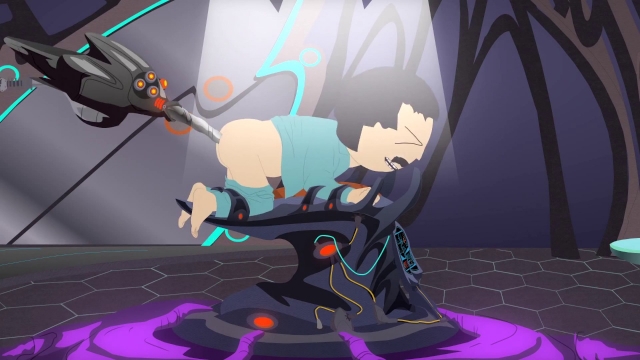
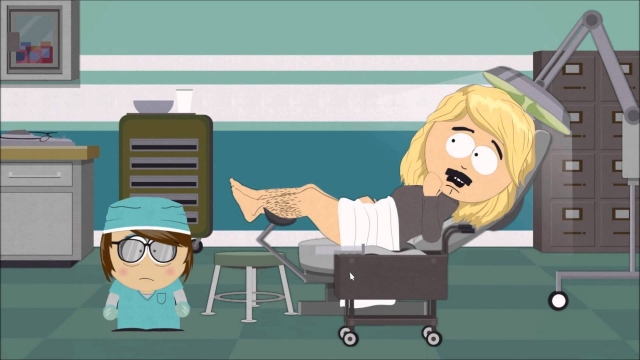
What’s more offensive, shrinking oneself to the size of a gerbil and crawling up a gentleman’s behind to explore his insides, or pretending to perform an abortion on a man, only to accidentally vacuum one of his testicles?
According to PEGI, the latter is the far more offensive scenario... but why? Without context, both situations sound as gross as each other, but in South Park: The Stick of Truth, only one of these was deemed offensive enough to receive a big fat censorship award: unless you lived in the States, all you got to see was a mocking title card, reminiscent of old public broadcast announcements.
Imagine if you will a merry trip to the cinema to see a recently released film flick. Now imagine that the film in question has content that some may find objectionable. Do you watch it anyway, knowing that the content in question has context, and that you’re a responsible adult able to make your own damn decisions, or, do you just not bother emptying your wallet to watch said film?
It’s a reasonable and logical choice, and it’s one that gamers don’t get. Instead, we’re subjected to a culling of content, with the end product being an incomplete one. Whether you believe that the games industry has matured or not is a choice that deserves much consideration, but as far as the mainstream press is concerned the question has, arguably, already been answered. If a feature film was plastered with title cards telling you that the following content was too explicit for your eyes, would you sit back in your uncomfortable, pull-down seat and accept it? Probably not, and nor should you. I mean, it should be up to you if you’re mature enough to witness something so unspeakable that it needs to be censored.
If you’re a responsible parent and don’t buy your children games that carry age restrictions then the only people consuming this content are adults, a sentiment probably not shared by PEGI (previously the BBFC). Of course, we know ignorant parents – and people in general – exist, but this isn’t a justification for denying individuals the choice of whether to consume content or not.
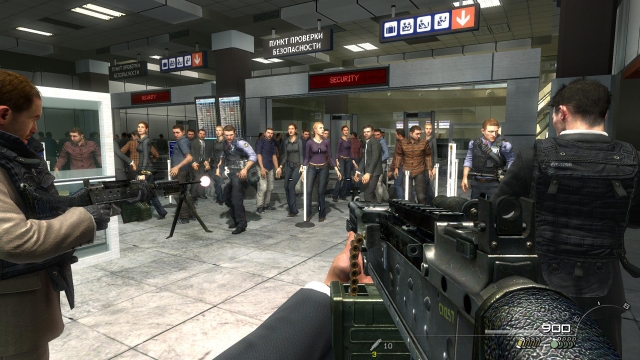
The Stick of Truth is just the latest casualty of a flawed system, and there are multiple examples of this double standard being used in the past. Manhunt’s release in 2003 and Modern Warfare 2’s ‘No Russian’ mission caused outcry with their respective releases, but both feature content seen regularly in film.
The Hostel and Saw film series both contain high levels of questionable content, yet both were released without so much as a hint of petition or media outcry. A game developer creates a small minigame where you perform an obviously fake abortion (it’s a man) on someone, and everyone loses their shit.
Stating that the film industry doesn’t suffer from censorship at all would be short-sighted, but it is afforded far more leniency with how graphic its content can be before anyone takes notice. There’s little doubt that, had the subject matter of The Stick of Truth been serialised in the South Park TV series, its content would have passed without so much as a whisper of caution. Of course, there’s no way we’ll ever know the answer to the above without being able to travel to parallel universes, but it’s interesting rhetoric nonetheless.
Regardless of why this double standard still exists, it’s disheartening to know that it does. With the risk of trudging through familiar – and boring – territory, prejudice in the industry extends beyond double standards in censorship. Rockstar’s Grand Theft Auto series has been the subject of multiple witch hunts in the past (looking at you, Jack Thompson), purely because it contains content that the media can latch on to and blame for violent behaviour. Forget that the series is an excellent satirical portrayal of American pop-culture, or that it provides an almost unparalleled sandbox world for you to explore; you steal cars and have sex with prostitutes too, and that obviously makes it evil.
But context doesn’t matter apparently. For the videogame industry to achieve the same level of freedom as other digital entertainment, the wider media needs to recognise its validity as both a universally appealing hobby and a potential art form – not as a child’s bedroom toy. Wider recognition of titles like Journey and The Last of Us simply doesn’t happen, and while there’s nothing inherently bad about the likes of the Call of Duty and Grand Theft Auto series being recognised in the tabloids with each release, they’re being so for all the wrong reasons.
The general public only sees the violent side of gaming, and this is what causes misguided preconceptions. Not until the industry as a whole is granted the same levels of attention that a select few currently have will the uninformed have a better idea of how diverse interactive entertainment can be.


COMMENTS