
From £20 Indies to £100 Blockbusters: What on Earth Happened to Game Prices?
Historically, I've been a person who was willing to defend — nay, tolerate — the idea of $80 games, so long as the change made sense. While the hike comes after a sudden announcement from Nintendo (which seemed like a hint of shame, seeing the Nintendo Direct for the Nintendo Switch 2) and shortly after the hike to $70, it's something I'm willing to stand by.
It's interesting that the price increase announcement has led to what feels like the most consistent amount of quality... for titles that aren't even taking advantage of it. Introducing $80 games to the industry has led to a strange phenomenon that feels like a videogame civil war — some developers and publishers have abolished the idea, all the while some stand behind it (or "coyly" toy with the notion of the higher price tag).
The absurdity has been on full display throughout the tumultuous year that 2025 has been in terms of pricing. It's a rollercoaster of emotions that has been tugging and pulling at us for the decade that these last 10 months have been — $70 games, $80 games... and then, $20. $30.

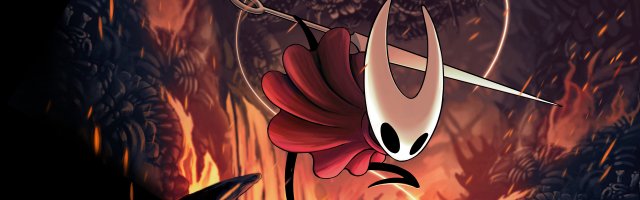
The launch of Hollow Knight: Silksong felt like a mythical event, not just because the endless Silkposting about its eventual release eventually came to a stop, with the Believers taking the crown. In the blur that was gamescom and the Nintendo Direct that showed snippets, suddenly, we had confirmation of the launch of the highly anticipated sequel, all adorned with a reasonable price tag of $20.
I'm not saying this should be the norm — the industry at large disagrees with this notion — but it felt like Team Cherry blared the warhorn, shocking the world with a 33% inflation from its original title back in 2017. Silksong wasn't only assured to be a massive economic success for the bug-sized three-member team that developed it, it was a cultural phenomenon — a cataclysmic event — that led to the delay of even Bennett Foddy's sequel with Devolver Digital: Baby Steps.
Team Cherry is at a unique position where they can ask for just $7 when it comes to the most highly anticipated indie sequel of all time, ensuring that third-world countries can experience it. Or offering it day one on GOG, which led to merely 15 minutes before the entire GOTY-worthy experience was playable for pirates sailing the high seas. Yet several pirates immediately offered support for the title, voting with their wallets.

Not long after, Supergiant Games came forth with the full launch of the sequel to, yet again, one of the biggest indies in the industry: Hades II. Though the team priced it at a heftier $30, it's undeniable that the experience is worth that, and much more, purely based on gameplay value, length, and the quality of the product itself.
The most surprising of the dissenters against $80 games, however, is none other than Sandfall Interactive, the proud team behind one of 2025's biggest surprises: Clair Obscur: Expedition 33. With many of the team's leads having Ubisoft roots, the developers fought an uphill battle against the struggling genre that RPG is, and created a high-fidelity title, pricing it only at $50 for its entry, below even the previous-previous standard of $60.
It's been six months, and it has sold five million copies.

Then, batting for the enemy team, is Xbox Game Studios, offering up The Outer Worlds 2 at $80 for a while. Interesting in this case was Obsidian Entertainment's response to the ordeal, telling players to take it up with the higher-ups at their publishing company: they wanted to see their sequel in the hands of as many players as possible.
It's a political, diplomatic way to say that they didn't really agree with the pricing, and the irony of The Outer Worlds being bought out by a major company in the industry, only to set it at what's being seen as an "anti-consumer" pricing, isn't really lost on anyone. But the pushback saw Xbox Game Studios lower the price for the sequel, and even the subsequent launch of the upcoming Call of Duty.
It's two weeks from launch at the time of writing, with The Outer Worlds 2 comfortably sitting at a 29th of October release date. The pre-order bonus for the Premium Edition, priced at a whopping $99.99, offers you the opportunity to play the game five days earlier for the small fee of an entire Hades II, because why not?

Over on the Steam Top Sellers of the week, The Outer Worlds has barely breached the top 200 games sorted by revenue earned, which, seeing its high price, should allow it to rank much higher with a negligible amount of purchases. Yet, its 177 spot is beaten by highly discounted titles that are already widely owned, releases several decades old, and — yes — month-old indies launching for $9.99 (looking at you, Megabonk, at fourth place).
Pricing in the industry is in a weird state where we can't rightly say that the more you pay, the more you'll get. Dozens to hundreds of hours in Hollow Knight: Silksong and Hades II say as much against the three-hour run of $40–$60 Little Nightmares III.
Meanwhile, the usual heavy-hitter Assassin's Creed refuses to share sales information for their latest title, Assassin's Creed Shadows, all the while already having a 40% discount just mere weeks ago. Monster Hunter Wilds rapidly barrels its way to Mostly Negative user reviews on Steam due to performance issues and some gameplay niggles. And even the one that started this all, Mario Kart World, is actively being outsold by its better-priced, outdated, and nearly 10-year-old competitor, Mario Kart 8 Deluxe.

What a strange year it's been for the videogame industry.




COMMENTS