
Hollow Knight: Silksong Review in Progress
Six years have passed since we heard that Team Cherry's legendary Hollow Knight was going to get a sequel, as players would be taking on the role of Hornet. The highly successful original concluded back in 2017, though its robust post-game updates kept the experience going for a long time, even creating a boss gauntlet that became notorious — the Pantheon of Hallownest.
Hollow Knight: Silksong has a lot to live up to: the massive success of Team Cherry's debut title, the gigantic post-game success that came with it, and the gargantuan amount of wishlists that the game accrued before its launch. It's out now, it managed to crash several storefronts, and we've finally got our hands on it — did it live up to expectations?
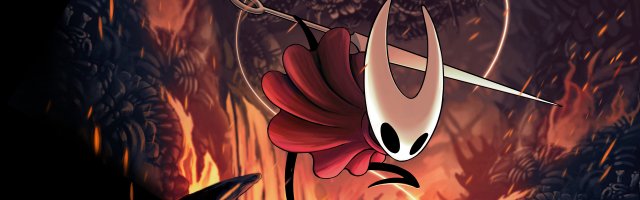
In Silksong, we don the role of Hornet, a major character in the original title. As the daughter of one of the Dreamers — and two-time boss fight — she felt like the only natural character for us to take control of after the passing of the Knight.

Her robust skillset is present, though it's not something that is available from the get-go; instead, we need to advance a bit through the narrative, as Hornet was taken forcefully from Hallownest into Pharloom. Bound by a cage that subdued her spider powers, she was taken away for days, losing her strength in the process, so we get the shell of her former boss self (as is usual when you get to play a boss in games).
Freeing herself from the wreckage she created after breaking free, Hornet sets her eyes on one goal: climb Pharloom and slay the beast that would have her taken. After all, her captors have made it clear that escape isn’t an option.
Starting up, Hornet's skillset is different from the Knight's — palpably so, and not necessarily for the better or worse. Pogo-jumpers will find that Team Cherry has nerfed them severely, as Hornet's strength lies in her dexterity, including a 45-degree downward attack that is much harder to hit than the good old pogo, but it's satisfying as always.

Skills are unlocked routinely, and as any good metroidvania, Silksong encourages the player to return to previous locations with each new ability. From new secrets and collectables to acquire, to even sidequests to complete, it’s ever-so exciting to unlock Hornet’s recognisable attacks.
Her kit is comprised of distance combat, giving the opportunity to damage foes from afar with ease, as Hornet's sewing needle has a hefty range that's thrilling to take advantage of. Her slower attacks are compensated by great distancing opportunities, and it really plays into the long reach that she had in the first battle throughout Hollow Knight.
The most exciting part about Silksong's combat isn't taking control of a boss and wreaking havoc through a new location: instead, Team Cherry kept in mind that many have fallen in love with the tools that Hollow Knight provided, and even before finishing the first boss, you can unlock the most substantial upgrade. Hornet can change fighting style whenever resting at a bench and changing her Crest, so after battling through some tough locations, you can actually unlock a variety of different builds, each with unique attacks, heals, down attacks, and more.

The first one that players can get access to feels like a tear-inducing throwback to the Nail builds from Hollow Knight, showing that Team Cherry didn't forget their primary audience. While the length of Long Reach or Mark of Pride is entirely gone, the first unlockable battle variation feels like the quintessential Quick Nail build, including the pogo jump ability we fell in love with.
The difference between these two fighting styles alone is staggering, and it feels amazing to fight bosses with different ones, as the tactics change entirely. The default's attack pattern and downward hit feel surprisingly comfortable (scarily so for pogo aficionados like myself), and it fits like a glove in the gameplay style, but being able to return to tried-and-true Quick Nail builds feels nostalgic.
The difference in playstyle is so comfortable to shift between, and each boss fight feels like a unique beast with different Crests equipped. The windows of attack are more or less comfortable with some, and it offers a great opportunity to experiment with what feels right for the player rather than forcing them into one specific build.

So far, I've encountered three different playstyles thanks to the shifting weapons. The third, hidden behind a surprisingly tough boss fight, offers Wolverine-like claws to slash foes, replacing heal with a lifesteal ability that can certainly output more safety than either nail or sewing needle… but its highly aggressive style is not for the faint of heart.
Experimenting with the different Crests is exhilarating, and it adds a level of replayability that Hollow Knight was lacking. Though these did replace Charms through the adventure (which are still semi-present in the form of Tools, but not as game-changing as before), it is an overall positive upgrade to battling.
Crests encourage the player to change their fighting style according to the different attacks that'll be available, and these also come with different notches for the Tools throughout the game. Over the first few hours, these have felt a bit underwhelming in contrast to the original, but with the addition of Crests, it would feel redundant to offer the player a robust set of choices in both mechanics.

Tools come in three different colours, with each dictating how it changes the overall build: red Tools are spells that Hornet can use (including a few familiar attacks), blue Tools are defensive manoeuvres to keep you alive longer, and yellow Tools are functional (think Compass or gathering your money for you). Each Crest has a different combination of available slots between red, blue, and yellow, so it encourages different playstyles.
While it does feel a bit limiting without motive, Tools aren't game-changing enough to warrant complaining about the limitations coming from Crests. In fact, the natural incorporation of quintessential Charms like Quick Slash into Crest builds feels great to work with, as it's far more versatile and allows spending the limited slots in what might otherwise have become niche.
The biggest issue I’ve encountered — which I’ve not particularly struggled with but I know is a pretty common complaint — is that Silksong’s economy feels a bit skewed. Currency is split among two different types: Prayer Beads that can be utilised to make purchases with the faithful Pilgrims of Pharloom and Shell Shards.

The first one I want to talk about is Shell Shards: these items are a dime a dozen in Pharloom, and they’re used to repair any Tools that count as spells. They work as crafting materials to repair locations and restock spells to use them in combat whenever resting at a bench.
They’re pretty much non-existent and are easy to ignore — there are so many that it’s a non-issue throughout, especially for those who favour fighting with the sewing needle. Prayer Beads, however, are far more rare, and they’re used for any purchase: items from vendors, benches to unlock, and fast-travel points.
The economy can feel a bit skewed towards the negative in this case, but I personally haven’t had an issue regarding the amount of Prayer Beads I’ve had available. There are enemies aplenty to defeat that’ll drop them, with easy routes to farm in a pinch, but farming them felt counterproductive; revisiting and exploring provide a sufficient amount that feels balanced.

It’s especially a non-issue thanks to the Wishes (which are the sidequests). The devout Pilgrims of Pharloom offer players enjoyable detours across the land that might sometimes ask for favours in exchange for items, more often than not, Prayer Beads. It can feel limiting at first, but getting a surplus of these is pretty easy with enough patience.
Silksong does have a caveat that's worth mentioning: it feels exponentially more challenging than Hollow Knight, even early game. While adept players will already feel comfortable with the movement and feel right at home, even with Hornet's unique skill set, the sequel is — quite frankly — not newcomer-friendly.
In its essence, Silksong feels more like a post-game expansion of Hollow Knight, introducing difficult mechanics like doubling the damage you take from some attacks (and a surprising amount of enemies with this in their kit). It definitely feels more like a love letter for fans of the original game looking to experience more of endgame Hollow Knight, which can sometimes feel exclusionary to newcomers of the game.

It's not a complaint, and as a person who wishes she could play more Hollow Knight after finishing everything there was to do, it feels like a boon. Team Cherry quickly catches players up to speed regarding all sorts of abilities, and it feels like picking up from where we left off, which feels all too lacking in modern-day gaming.
My ascent through Pharloom has been nothing short of amazing; aside from minor hiccups regarding the new-player accessibility, Hollow Knight: Silksong is proving to be a behemoth of a sequel. It's a fast-paced masterpiece that recaptures the charm of the original, while enhancing pretty much every area: combat, customisability, platforming... even some of the bosses I've fought have been more memorable than the ones I hold so dear from the original.
So far, it seems like Silksong is a no-brainer pick-up for any lovers of the first game. If you're just getting into the Hollow Knight franchise, I’m inclined to suggest that you first try the original entry rather than jumping into Silksong.





COMMENTS