
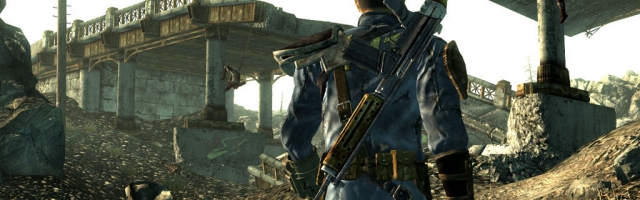
I Don't Want To Be A Hero
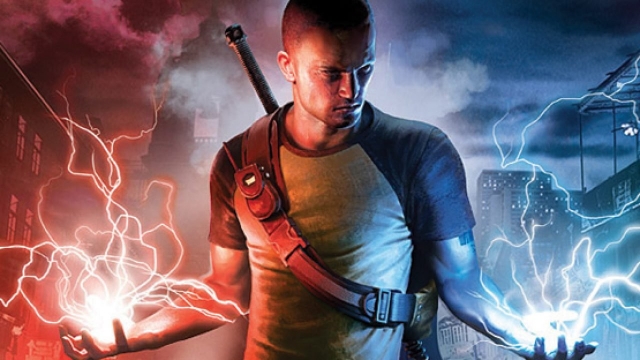
Remember during the PS3 and Xbox 360 era, where moral choices became a huge part of games? inFAMOUS, the Fallout games, Dragon Age: Origins, Mass Effect, Spider-Man: Web of Shadows, Epic Mickey etc.? Nearly every single one that tried to do it had a very binary choice system. There was no grey area, it was either the stairway to heaven or the highway to hell.
And you know what, I never went down the evil path.
Even if I started a new playthrough, I just couldn’t will myself to perform acts of evil. Just knowing my actions had consequences prevented me from exploring (what was essentially) one half of a game. Given the power to do anything, I would use it to help people - even if it was just in a videogame. Senseless violence, only fighting in self-defense or to get people out of trouble. Those were my general rules when it came to games like that. But as soon as I jumped into Saints Row or GTA, all of that went out the window as I drove on the sidewalk, ran over bikers and camped-out inside stores to shoot everyone that came through the door. There are no consequences in GTA, so why not go full psychopath and just mow everyone down?
And that’s what I want to talk about right now: Actions having consequences in games and when they don’t.
Giving a player a choice is actually one of the most stressful things a game could do on a first playthrough, especially in RPGs where it could actually affect the story severely. Which starter pokémon should you choose? Who do you let die and live? Do you go through the left door or the right door? Do you cure cancer or give people cake? More often than not, it’s binary. You only have one or the other and more often than not there’s a good choice and a bad choice. It’s easier for the writers to write, and the programmers to program. You don’t want your protagonist to suddenly join the antagonist or completely ignore the carefully laid out storyline and spend all day inside doing nothing. But those types of choices just feel... hollow. There’s no real moral ambiguity. You either make things better or make things worse.

The best type of binary choice is when you can’t really choose, where either situation would leave you wondering if it was the right call. Take the first Mass Effect for example. A later part of the game makes you choose between two of your allies to stay behind and be killed. Both have their tragic backstories, their positives and flaws, but at the end of the day, someone has to die. There was even a third choice at one point where you could save both but it was taken out because it was the “right” choice. Many players would’ve gone for it instead of facing the decision - it was cheap. Even then, Mass Effect still had their binary choices and the galaxy is better off if you play Paragon rather than Renegade.
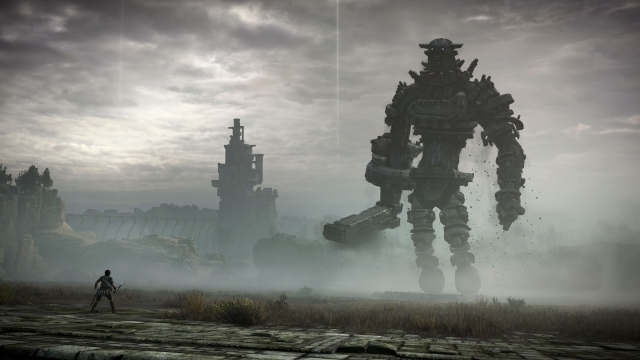
So, what’s the opposite of binary? Giving full control to the player. The player’s actions speak louder than words. You don’t need a menu or a list of dialogue options - it’s ultimately how the player reacts to a situation. And it’s really interesting to watch how other players deal with it. Spec Ops: The Line does this brilliantly because the moral choices you make are up to the player. Everything you do is based on what you can do in the game: run, shoot, melee, etc. When faced with angry protesters, you could simply knock out someone, shoot into the crowd, or fire into the air to scare them off. Or during the ending of Shadow of the Colossus, nearly all players try to attack the soldiers rather than surrender even when it becomes obvious that you’ve become the villain. There are no prompts, it just happens and you are punished accordingly.
And so, why go into this? Well, mostly because of Cyberpunk 2077. Player choice plays a major role in the game since, well, it originated from a roleplaying game. On your climb to the top, you’ll often have to make tough choices and sacrifice people in order to do so. Even with prompts, you’re still given full control of your character. Shooting at any time is a valid option, and how you use your mission critical items is a choice in itself. And in a world where corporations run the world and the only way to survive is to fight dirty, it’s going to be difficult to be the hero of the game. And I like that. I want to see and feel every choice I make, knowing that I thought it was the best option instead of subtly guilting me into being good. I want to feel like I’m shaping the world instead of letting it guide me down a particular path.
I don’t want to be good. I want to feel like the choices I make are a mistake.


COMMENTS