
Nine Games to Blame for the Videogame Industry's State
I've been on a bit of a crusade against the videogame industry — a worrisome thing as a videogame journalist, really — and I found myself recently questioning: how did we get here? From the wholesome and innocent times of the "console wars" (how easy we had it then) to a live-service dump demanding player attention, it feels like we lost the whole point of gaming somewhere along the way: fun.
It's been a painfully slow process spanning two decades, from majestic Dragonairs into goofy Dragonites, just that instead of being an epic fantasy Pokémon evolving into something many see as less appealing, we devolved from gamers to metrics, from people to revenue streams.
I wanted to understand how it all went down and where it all began, because it's been a continuous deterioration of when the videogame industry traded creativity, joy, and innovation for KPIs, retention charts, and psychological manipulation. From what gaming used to be — the thing that turned us all into gamers — into the joke the industry is today.
An absolute shitshow.
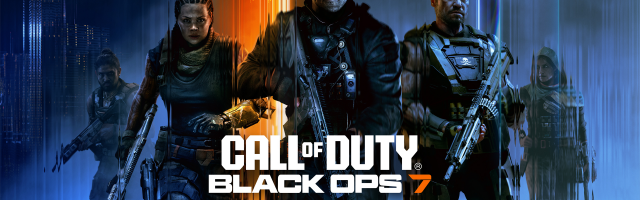
Call of Duty: Black Ops 7
Artist who? We choose AIrtists.

I thought I'd get through this whole article not talking too much about Activision because previously, their worst sin was "re-release game", which, honestly, you're asking for it if you've bought three in a row. But then, of course, they had to release Call of Duty: Black Ops 7.
Launched on the 14th of November, Call of Duty: Black Ops 7 is out to mixed critic reception — just look at the Metacritic numbers: 65 on Xbox Series X|S, 69 (nice) on PC, and 67 on PlayStation 5. Nothing too out of the ordinary, just a mid launch to a title that we've seen 53 different times.
Of course, that's if you decide to live under a rock, close your eyes to blatant AI use, and just actively cover anything that has to do with "audience score". Because Metacritic has it at a laughable 1.6, and even on Steam, it released to Mostly Negative, with only 38% of the 1,916 reviews being positive.

While Call of Duty: Black Ops 7isn't quite to blame for anything the industry is suffering from right now (again, ignoring re-re-re-re-releases), it's to blame for something much more sinister: the worsening of the industry in the future. Because if we let this slide, it's going to get much, much worse.
Tucked away at the bottom of the Steam page is an innocent, unassuming disclaimer. It's honestly almost harmless in nature, with merely one line of text that otherwise spells catastrophe:
Our team uses generative AI tools to help develop some in game assets.

Image credit: Bellular News.
You can find these assets yourself, not in the promotion parts or marketing, but in the in-game calling cards, which are... suspiciously Ghibli. No matter your stance on AI usage in games, there's an air of ChatGPT about some of the calling cards, and many of them are just fantasy-oriented, which has pretty much no place in a notoriously modern-era (or at least post-gun era) setting.
That's before we start talking about the wildly varying art styles that show no consistency whatsoever, or the fact that this has been going on since last year's entry, Call of Duty: Black Ops 6, and its six-fingered Santa zombie. Of course, that one has a bit more of a positive rating, which showed Activision they could get away with some AI, so why not push it a bit more?
Black Ops 6 was patient zero, and Black Ops 7 shows that the disease is spreading, and it's here to stay if we don't do something about it. First, it's calling cards; then, it's concept artists. Then, it inflates past everything: coding, writing, acting.
That "help" in the AI Generated Content Disclosure is really doing some heavy lifting.
Fortnite
FOMOrtnite

Fortnite has long since had a young fanbase, and this is not really a question — Demandsage puts Fortnite's player demographic of 18–24 years old at 62.7% of the total playerbase. And while you might think, "Oh, that's not too bad", this isn't accounting for the fact that at that age, the human brain hasn't even fully developed.
The number of underage players in Fortnite has always been an enigma (aside from the squeaking children screaming into microphones giving us a hint), but the FTC has an idea. According to a document named "Epic Games: Complaint for Permanent Injunction", it claims that, according to social media data, a third of Fortnite players are aged 13–17, which is the youngest age demographic available in social media data, meaning it could go lower.
Even point 30 states that Epic's own surveys approximate 70% of players live with their parents or guardians, and 80% identify as "students".It's proxy data, and we will never know the specifics, but if the Floss dance, trends, and what our very eyes and culture show are anything to believe, Fortnite is aimed at children first.

Epic Games utilises FOMO ritualistically, and it can be seen in the store — that weekly 4 pm "claim your free game" pattern is harmless, even consumer-positive, for adults. But when Fortnite applies the same psychological loop to a much younger and much more vulnerable demographic? That's where the shift from clever to sinister really starts.
The game weaponises FOMO to try to get players to impulse-buy, creating a dependency system and a fear: what happens if I don't log in and miss that Naruto skin I wanted so badly? What happens if I miss out on the next trend and event?
These instil habits and ingrain behaviours — and before 25, a person is still malleable enough for that to stick. It's a feedback loop, engineered to make sure you don't "miss out", you don't stop logging in, and you don't stop purchasing.
And the worst part? Fyodor Dostoevsky puts it best, "The second half of a man's life is made up of nothing but the habits he has acquired during the first half".
Counter-Strike
The first meme coin... before meme coins were a thing.

Oh, you thought you were safe because we love your monopoly, Valve? Think again.
Here's the funny thing about NFTs, meme coins, and the eroding industry we have at the moment: it all could hypothetically be traced back to early gambling in Counter-Strike. Heck, we say early as if the market for Counter-Strike 2 knives didn't JUST crash and break everyone's "investment" (quotations 100% intended).
It's genius and nefarious in all of the corporate ways (and I say this as a Gaben cult follower), like those memes in movies when one of the evil employees says something and you realise, "Oh, this is the villain". The plan is simple: create a very famous game, add weapon skins to it, and then provide the very market that they will be sold on. This gives Valve complete and utter control over how many items there are in the market, doubling down on the "digital scarcity" that doesn't exist.
It wasn't long before gambling sites popped up, and yes, they were abused in every which way — show a streamer "winning big" and then have a bunch of people think they can do it, too. While Valve didn't partake in the third-party gambling sites that played on the casino-style games, it's not like they really did much to stop it, either.
And so, Valve created the very first meme coin before meme coins were a thing, all packaged up with the extreme devaluation at lightspeeds. It had the whole nine yards: buying, reselling, speculative value, the whole experience of an "asset", just wrapped in a videogame format.
Recent changes have made it "better", but let's be real: when Valve gets away with something, it teaches the whole world that sleights of hand exist. Just do a few good things, and the industry pretends underage gambling wasn't part of the ecosystem for years.
Genshin Impact
Not pay-to-win — pay-to-participate.

I have been in the industry long enough to remember the outcry against the pay-to-win model — the idea that if you were richer, you could just pay your way to victory with no option for the poorer of the bunch.This was adapted masterfully into pay-to-progress, which is using your far more valuable currency (your life) by making it impossible to progress if you don't fork over money. Isn't that fun?
But MiHoYo had a different idea to pitch: what if we make people pay to participate?
It's not what we're used to in terms of the videogame industry; paying to play a game is essentially the bare bones of pretty much any major market in the world. Instead, it's about paying to continue participating in the game's latest fad, trend, or hot character.
Free-to-play progression with months of your time wasn't enough for this humble mobile-turned-PC pandemic darling. No, the nefarious model was tying emotional investment to financial investment, turning you into the sugar daddy... except it's not a real girl but an anime waifu.

Genshin Impact creates lovable waifus and husbandos that you'll fall in love with through the story, personality, and generous design (you know what I'm talking about). They're charming, friendly, and what many would call "simp-worthy". And if you wanted to keep them around? That's fine, pay up to $550 for a character's first constellation… of seven.
The real kicker is the fact that they're time-limited banners, too, with no guarantee of a possible return. I'm sorry, did you miss out on Tighnari because you weren't playing at the time? Well, he didn't earn enough revenue for the Genshin Impact overlords, so he's been in a bannerless jail for 58 months now and counting. You'd better get your wallet out for the latest trendy character, lest they never return.
It's everywhere now, and games are trying to find every which way to add "proper" additions to the gacha machines, which is essentially legalised underage gambling. It's evil when it's cosmetics, but when it goes down to playable elements? It's downright villainous.

It's funny looking back at how nice we had it before with cosmetics or, heavens forbid, lootboxes, before Genshin Impact came around and topsy-turvyed the industry. Now we're more strict about our in-game wallets for the next thirst-worthy contender than we are about our life savings.
...Because our life savings are needed for our next thirst-worthy contender.
Diablo Immortal
Don't you guys have phones? Because if not, you're too poor and we don't want you.

Diablo is a franchise I've never really played, but even I felt the impact of that infamous line: "Don't you guys have phones?". It was a definite mask-slipping moment for Blizzard, showing that one of their strongest franchises was never intended to be aimed at fans of the game, but instead aimed at investors.
Its infamy never really reached the heights it deserved, given how utterly egregious the monetisation turned out to be. Back in 2022, Diablo Immortal launched like a clown car of every mobile sin imaginable: time-gating content, paywalling legendary chest acquisition, paywalling grinding, FOMO cosmetics, daily login traps...
But the real kicker was that this was one of the first times a big company, and a Western one at that, brought it to the mainstream. This wasn't Genshin Impact launching on PC and shaking the world with gacha and predatory monetary practices; it was your trustworthy, ever-beloved Blizzard... before the videogame industry deterioration reached them.

The general gist of Diablo Immortal is that it had a disastrous reveal, and then Blizzard went quiet to develop it, knowing that they'd eventually launch and earn their money's worth. Not because the game was worthy or great like the other Diablo entries prior, but because all it would take was one dedicated whale to do it all.
It was Diablo turned mobile, monetising mechanics that were previously free in the others, and reducing your capability to grind to time-gated content. Did you want to run that dungeon again? That'll cost you a bit. Did you want better odds of getting an ultra-rare five-star gem? That'll cost you a bit for the premium Battle Pass track.
It's free-to-play, which is the worst catch-all the industry ever discovered: you play a bit, you get hooked, you spend a bit because you have some loose change lying around. Before you know it, you've racked up a AAA's worth of money on a single free-to-play title, but Diablo Immortal did it with basic mechanics and RNG.

Or, you know, that bit by bit finds you with six figures worth of monetisation to fully kit out... one character.
Diablo Immortal monetised mechanics that other games (even within the same franchise) offered for free. You could grind your way to victory and claim the rewards of your blood sweat and tears in Path of Exile and Diablo III... or you could claim the rewards of your blood, sweat, tears, and money if you wanted to do it in Diablo Immortal.
And the circus act of it all? It had earned $300,000,000 in revenue by the 4th of November.
Of course it had to be NetEase.
EA's Ultimate Team
Gambling: now available in family-friendly packaging.

It's challenging to get through an article about the enshittification of the videogame industry without talking about EA. Much like Call of Duty's yearly entries, this isn't the actual downfall of the title, though it's a big chunk of it.
Screw spending annually to get a game, what about spending annually to get a game and get the casino? But instead of a casino where you get your money's worth, it's pay-to-win mechanics that will become irrelevant the year later, because we need that sweet, renewable income.
I was a complete novice to all of this before doing my research, but the gist is simple: FIFA games, and later, most EA Sports titles, include this "Ultimate Team" mode that's an optional side game mode where you get cards by spending in-game currency to pull. Of course, it wouldn't be in this list if it wasn't because you can also get cards by paying, giving you the opportunity to try to get the rarest cards more frequently, essentially exacerbating modern-day pay-to-win.

Each player has their own stats, and you can build a club ("ultimate team") of players to battle against others in offline and online sessions. The best cards obviously have a lower pull rate, and doing even a semblance of research on this finds dozens of reddit threads echoing the same sentiment: don't spend on it.
Of course, if it didn't generate money, it wouldn't be added in every other iteration (and every other sport) — EA would have dropped it by now. But what makes this addition particularly criminal is the fact that FIFA games have always been kid-facing, with ESRB/PEGI ratings of E For Everyone and 3+ or 7+.
The hardest part of doing the research for this bit was learning about Anne Longfield's "Gaming the system" of October 2019. She's England's Children Commissioner, and inside this report, you can see quotes from kids, and the monetisation part? It hits like a truck.
In some cases, this spending was done in order to receive a collection of unknown rewards, so-called loot boxes. The most obvious example of this is FIFA player packs, which some children acknowledged as being similar to gambling.

It's easy to wave it off when it comes to adults who "should be adults", but this is more systemic than that — it's ingrained into a culture that children are predominantly present in. EA normalised lootboxes (often tied closely to gambling) that other companies doubled down on, like Overwatch and League of Legends.
And if that didn't hurt enough, then I'll leave you with Lee, age 14, a FIFA player.
I never get anything out of it [buying packs] but I still do it.
League of Legends
The moment publishers realised the game wasn't the product — you were.

This article's one point and premise is simple: showcase the damage that some industry trends have done to the videogame industry. And if any one title damned everyone to the free-to-play fad that we're in today, it was the first hyper-successful free-to-play game to hit mainstream.
League of Legends actually began as a spiritual successor to the original DotA mod, part of the same lineage of MOBAs that emerged from Warcraft III and StarCraft custom map culture. The amount of concurrent players is downright baffling, and outright scary: League of Legends sees 10–11 million daily players, with monthly players crossing the 115 million threshold — it's country-levels of absurd.
It's staggering, and if you felt that drop in your stomach, you're not alone — investors did, too. If even 1% of people spent a single pound on the game, it would rake in £1,150,000 in revenue in a month, and those are generous numbers that don't reflect the actual player journey.

This is the turning point of the industry that lit the flare for everyone else close enough to see the shining light: League of Legends was free-to-play, and it was earning disgusting amounts of money. If Riot Games, a small indie developer with less than 200+ collective years of professional game design experience (at the time) could earn so much, what could others do?
It's frustrating because Riot Games didn't belong in this list among the industry giants that have corroded the videogame industry. It wasn't until they started joining in on the predatory practices, too — lootboxes at first, then gacha (even if just cosmetic), battle passes, limited-time skins for their hit show Arcane. All labelled under the umbrella of "keeping the game active with content".
While 2025 has been a weirdly leaf-turning year for Riot Games and some of their evil practices, like walking back the Hextech controversy after public outcry, their ledger is stained. Whether it's because of the harmless free-to-play beginning that let others know we'd play anything because "why not" and rack up thousands of dollars spent, or their recent controversies.
But never forget, especially in modern-day gaming: If it's free, you're the product.
World of Warcraft
Now you can pay taxes to live in ANOTHER world, too!

It's a little funny (read: sad) that Activision Blizzard makes it to this list with nearly every single franchise under their umbrella. To their credit, World of Warcraft was one of the least ill-intended at the time, and it's actually a cautionary tale: when you get too creative, the industry suffers from your success.
World of Warcraft is an enigma of a game, the ultimate videogame to end them all: a world that you can live in that has cities, towns, people... it evolves, shifts, and cultures change. The experience varies from class, race, faction, but it's beyond that: different cultures exist from server to server, and the world evolves and moves.
Blizzard is celebrating its 21st anniversary as the arrival of their eleventh expansion closes in, with players looking forward to housing in Midnight (20 years too late, but at least it's here). With every new expansion, the world grows just a bit more, with new zones, stories, narratives, you could get lost for years in World of Warcraft (me included) without touching a single other game and have content for ages.

...If you pay the subscription fee, that is. Essentially, it's the Azeroth tax, making it so everyone who buys it pays two different taxes: the real-life one and the one to step into a digital world.
I'm not saying it's unjust — £12.99 a month isn't particularly steep to unlock essentially unlimited potential of content. Even for price-sensitive gamers, it's the most affordable game in the world, giving you access to as many hours as you can sink into it for the subscription fee.
Yet, this is another case where it isn't malice that led us here: everyone else noticed World of Warcraft because it was everywhere. Mocked and hailed alike, Azeroth carries the proud title of being worldwide recognisable — the definitive videogame.

This came at a cost steeper than buying World of Warcraft since Vanilla (a rough estimate of £3273.48, by the way): it affected the industry. At the time, you bought the game, you bought the expansion, and you paid your subscription, doubling down on buying,DLC, and microtransactions, and it showed that gamers would pay more than the standard fee.
It showed executives that players would pay three times for the same game: the box price, the expansion price, and the monthly subscription. World of Warcraft invented the idea of living in another world forever... and then ironically proved that all it took was one licensing dispute to lose it all forever.
Ask China — they found out the hard way. Thanks, NetEase (again).
The Elder Scrolls IV: Oblivion
Horse armour, of course.

Hello, Bethesda. Let's talk about your lesser-favourite child: The Elder Scrolls IV: Oblivion, and honestly, the first main point of contention that, really, we owe pretty much all of this to. Because who better to pin it on than the team that mastered the world of The Elder Scrolls V: Skyrim and milked it for three re-releases (or 17, if you want to count each platform individually).
Most of the things that happened in the industry, and the things we've mentioned in this article, somehow link back to one fateful moment in 2006, before the popularisation of digital content. It was a wonderful era of full-fat games, boxed copies, and pre-orders that actually made sense.
Of course, it all has to loop back down to the horse armour DLC, originally priced at $2.50 — we call that a steal in our current industry — it was mocked, but never confuse "mocked" with "failure". Despite how badly people spoke about the first microtransaction, a Bethesda spokesperson speaking to VideoGamer said that the amount of sales "must have been in the millions".

It's surreal in retrospect how a single, tiny $2.50 cosmetic DLC sunk the industry. At least then, you got an extra piece of dialogue while claiming your horse armour; we're lucky if we scrape by with even a chest containing our purchase instead of just silently appearing in the menu.
It proved one thing: players were willing to spend their money on inconsequential changes. It taught the industry that it could charge for more than just extra heaps of content, especially at a time when the digital industry was kicking off.
Then, it inflated: cosmetics, more expensive cosmetics, Deluxe editions with cosmetics, seasonal passes... we even have experience boosts or early unlocks now that people pre-order games for. I guess we had it good when it was only cosmetic.
A fool and his money are soon parted, and we've spent 20 years mastering the art of parting.


COMMENTS
Unders - 05:14am, 29th November 2025
Thought it doesn't change much, Todd Howard did say a few years back when asked about the $2.50 DLC that he wanted to sell the horse armor for less than a dollar but Mircosoft had a limit on how low a DLC could cost.