
 AD
AD
Why Governments Cannot Make Up their Minds Regarding Loot Boxes
The problem regarding loot boxes facilitating gambling has been hot in the media for ages now. People and companies alike have been involved in a back-and-forth on the issue, but the consensus is seemingly that they are indeed a form of gambling. That is, at least, a sentiment that most non-governmental bodies share.
Governments, on the other hand, haven’t been as quick on the draw to declare loot boxes a game of chance. However, some countries have taken action to do so: both the Netherlands and Belgium have recognized them as gambling, and China obliges games with loot boxes to disclose the odds of every item appearing.
Nevertheless, progress has not been so speedy in other places. France, Poland, and Australia, among other places, have either disagreed with the gambling comparison or refused to investigate the matter further. Why is that? Before we can answer that question, we ought to first analyze what gives loot boxes, in the eyes of so many, the element of gambling.

What Relates Loot Boxes to Gambling
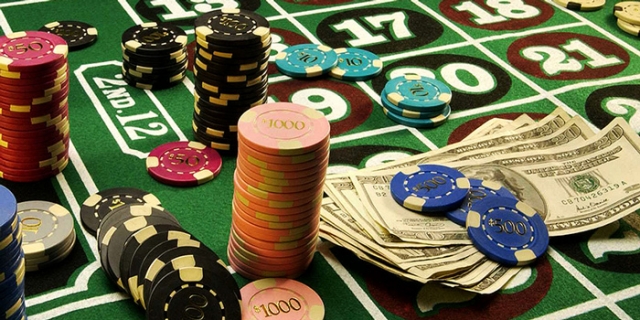
What are the two driving factors that make something gambling? If one were to look into, for example, online casinos, they would quickly notice two main characteristics that comprise every game. We’re not discussing graphics or anything of that nature, but rather the factors of randomness and the chance to profit.
For instance, one might ask: can you win real money on Slotomania? Certainly. Will you win, though? That’s not guaranteed, but you will definitely need to stake your funds. To get something valuable, people need to invest cash, and they don’t always get their money’s worth. But how does this carry over to loot boxes?
For the uninitiated, loot boxes are a game mechanic wherein players receive rewards that they can purchase for in-game or real cash. The items in these boxes can be anything from skins to weapons/armor or unique models. But the contents of what the players bought remain unknown until they have given over their money.
The items will invariably vary in value, with some being particularly rare and, therefore, worth a considerable sum to many a player. So those who do win some coveted objects can — and often do — sell them to players that want them.
That is how both randomness (the odds of winning a valuable item) and a chance to profit are present. Those are the two pillars against which the bulk of the argument lies. That is the one that claims loot boxes are a form of gambling.
Why Governments are Slow to Catch Up
Given the above breakdown, what is keeping some governments from associating loot boxes with games of chance? There could be various reasons, many having to do with corporate interest — the gaming industry is worth billions at this point, so they can influence policy greatly.
That said, one of the main reasons we don’t see countries following suit with the likes of China and Belgium has a lot to do with precedent. The concept of loot boxes, although old in our minds, is very recent from a legislative standpoint. Therefore, they haven’t had much time to form regulations around the idea. That is why the framing of loot boxes is so difficult for a country, seeing that it needs to define them precisely in order to determine what to do with them.
Now, while they do closely resemble gambling, some technicalities may exempt loot boxes from such a label. Free entry in some games (meaning that players needn’t pay to participate), for example, would be one of them.
Furthermore, the fact that the items, being virtual, don’t hold intrinsic value makes them more similar to prizes, as a 2017 UK Gambling Commission statement argues. Technicalities might sound petty, but they matter from a legislative point of view.
Another obstacle in the way for governments is a lack of transparency on the part of game developers and publishers. There have been multiple instances where the gaming industry purposefully frustrated any attempts at investigating the loot box question.
Loot boxes have proved quite lucrative for game creators, so it’s logical that they would protect their legitimacy. And calling them a gambling element would result in heavy regulations (depending on the country) that could sap away profits. Thus, whenever there’s an inquiry afoot, the gaming industry will hardly smooth things along.
Expect Results in Time
What was said above, discouraging though it may be, doesn’t mean that there will be no progress. We’ve definitely seen adequate government response in some countries. They can indeed create the precedent that others need to follow suit.
Furthermore, governments also have a vested interest in proclaiming that loot boxes entail gambling. And this interest goes beyond the need to serve people or uphold laws. Legal gambling usually has to undergo taxation, and attaching a gambling element to the gaming industry would create additional revenues for governments.
World powers will eventually recognise loot boxes for what they are. We’ve already seen great strides in that direction, so there’s little to stop this from happening.


COMMENTS