
10 Years of Tom Clancy’s The Division: And Why It is So Important To Celebrate This Milestone While Watching The Studio Eat Its Own Young
Ubisoft has not been at their best of late, laying off staff attached to anticipated titles, closing down studios, and executing their IPs in front of the masses in homage to the nation’s razor. The videogame company, whose fame and fortune came from the 2010s when each new title was exciting, has felt the blast from the gaming industry’s bubble pop and has not recovered as well.
However, amidst the death rattle of The Prince of Persia, Ubisoft and Massive Entertainment revealed celebrations and events for the 10th birthday of the Tom Clancy’s The Division franchise. This month, they have celebrated the milestone with a livestream announcing new content for the sequel and a new addition to the franchise for mobile, Tom Clancy's The Division: Resurgence, launching this April.

In addition, a “definitive edition" of The Division was released in February this year with all the DLC bundled, though enhancements to the game’s graphics and textures were absent, which had hardcore fans of the series groan a little.
What Is Tom Clancy’s The Division?
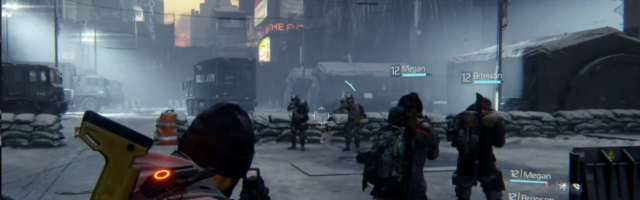
Tom Clancy’s The Division is a third-person action shooter released on the PlayStation 4, Xbox One, and Windows on 7th of March, 2016. You play as a customisable agent of a sleeper cell called “The Division”, who is activated after a biological weapon spreads a rapidly contagious disease across New York City. Attached to the second wave of the detachment, you and up to three other players must retake snowy Manhattan and bring it back into government control.
The playable map depicting the trash-lined concrete jungle, New York City, is broken up into different boroughs, each with main missions and encounters allocated to the three main wings: Medical, Security, and Tech. Each wing allows the player to unlock usable skills and equip perks by collecting points after completing missions, as well as experience points.
Throughout its run of seasonal events, The Division has had several free updates and expansions, as well as paid DLC, Survival, Underground and The Last Stand, adding to the already dense narrative of martial law and post-9/11 terror act scenarios.

The reception garnered on its release was favourable, with some reviews online scoring in the high 70s to 80s. Though, recurring points were directed at the negative aspects, like how long it takes to get to locations on the map on foot. Since the arterial roads are choked with blocks and abandoned cars, the player has to shuffle around on their feet to undiscovered locations and mission areas.
One of the biggest criticisms of The Division, and its sequel, was the optics and politics in the game's themes were going unchallenged. Early reviews only scratched the surface of the issue, with later analysis and critique regarding the players' role in the story being darker than the previous Tom Clancy titles.
Massive Entertainment, unaware, developed a game where you play as a member of the secret police, patrolling the streets for dissonance and disorder. In the first few hours of play, your opponents are looters; later on, organised gangs and a paramilitary. The closest parallel to the events of The Division’s disaster response is the real-life destruction of Hurricane Katrina across New Orleans in 2005.

You are shown to be a hero and a bastion of order, yet your actions, like reclaiming resources for New York residents, do not minimise the amount of stray dogs, starving people, and armed resistance in the city; they only add Joint Task Force (JTF) units and random words of encouragement occasionally shouted at you from the dark. The occasional individual who asks for a consumable for clothing or a weapon is the only time you, as the player, give aid without needing to kill someone.
So… Why Should We Care About the Milestone?
It is important to see how a game studio remembers its previous titles, just as it is important to see how they are treated. If a studio recognises any milestone for its games, even if it seems irrelevant to the average person, it usually means the title is beloved by its creators.
As we are celebrating a decade of Division, it looks like the series is enjoyed enough by the fans and studio that we may get another instalment before the end of another 10 years. The Division's lasting power stems from its action rather than the gameplay. Where reviewers at the time complained about the enemies being bullet sponges, the use of RPG mechanics, and combat AI of the game’s several types of enemy factions transform a monotonous gun battle of trickling health bars into fights with real-time strategy and flanking on both sides.
The Division’s PvP areas, called Dark Zones, turn up the heat by turning the MMO-style action into an intense extraction mini-game, which the gaming scene has had plenty of in the past few years. The safety nets of the main world are removed as you are accosted by higher-level enemy AI and the random rogue agent, both of which drop top-tier loot to reward the player.

Though The Division 3 is released, will it still have Tom Clancy’s name on it?
The Division was not officially getting approval from the late military fiction author Tom Clancy, but bears his name in the title. Tom Clancy’s franchise has been a staple in Ubisoft’s IP catalogue, rivalling Assassin’s Creed and Just Dance. From the earliest iteration of Rainbow Six, Ubisoft has experimented with the formula to develop and publish influential series using Tom Clancy’s work, like Ghost Recon and Splinter Cell. Ghost Recon: Advanced Warfighter showed off how good the Xbox 360 was on launch.
I have always wondered what will happen to Tom Clancy’s franchise in the future, and now there is a chance to predict the future of each IP. Next year will be Ghost Recon: Wildlands’ 10th birthday, while Splinter Cell’s remake is still in the works. Whatever Ubisoft does from now ‘til this time next year will be what they think of the franchise.

GameGrin are proud to have all their articles researched, written, and edited by real people that care about gaming.




COMMENTS