
Crimson Desert is the Proof of Why Pre-ordering Doesn't Make Sense Anymore
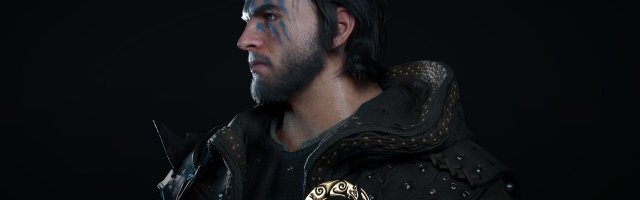
This week (at the time of writing), Pearl Abyss dropped the highly anticipated Crimson Desert. This single-player open-world experience is set in the universe of the MMORPG Black Desert Online, and based on the content, gameplay, and trailers, it looked like a massive, epic adventure.
It's not my type of game — the only open-world I've ever finished was Fallout 4 — but I'll admit, I was more than just intrigued. The graphics, combat, and setting were more than enough to spark my interest, and for but a moment, I nearly broke one of my videogame rules:
Never pre-order.

This started a few years back, sometime between the beginning of my videogame journalism career and the absolute mess of AAA experiences we started getting. Broken ports, crappy games, buggy experiences, it stopped making sense to pick up titles ahead of their release window (or even beyond), because "supporting" something before reviews are even in, both critic and user alike, felt like madness.
I doubled down when the incentives started to become playing early, or the so-called Advanced Access that we get nowadays. The prospect of gating the communal element of everyone coming together to check out an experience at the same time behind blind pre-orders and special editions, I felt, was a step too far.
I'd been thinking about making an article regarding the state of pre-ordering for some time, ruminating on the thoughts and talking points. Offering your money to major corporations ahead of release, the fact that pre-orders made sense when stock was limited, the missing peer-to-peer review element to gate bad experiences... There was plenty I wanted to talk about, but none other has proven this point more than Pearl Abyss’ recent launch.

Crimson Desert secured a 78 Metascore, which is certainly nothing to scoff at. While it's not among the greats, such as this year's Resident Evil Requiem's 89 or plenty of others with over 90, it's a respectable score for a first attempt. After all, it's a single-player open-world experience, a massive deviation from the MMORPG elements that Pearl Abyss has been working with in Black Desert.
It's not catastrophic — just lukewarm at worst, but a good show of future potential. It was enough to get gamers into the experience to check it out, and yes, it was enough to sell stupid amounts in pre-orders, outselling Kingdom Come: Deliverance II at the same point in the release cycle. This is a pre-established title, with a team that we could already trust to make epic experiences grounded in mediaeval reality, and one of 2025's best-sellers, and Crimson Desert had surpassed its sales.

Crimson Desert's downward descent didn't diminish once gamers got ahold of the experience, and on its launch day, it released to a Mixed score on Steam, with the scales slowly tipping to sub 50% positive reviews. It was an ugly sight, sure, but early reviews are hardly an indicator of a game's success, with plenty of displeased buyers judging experiences based on Steam's refund policy, trying it out for two hours and voicing concerns and dislikes for the product.
For an open world expected to take 60 hours for the main story and 100 hours to complete everything, two hours is only 2–3% of the whole experience; it's the equivalent of a tutorial in most games, if not a little bit less than. Crimson Desert's first weekend showed something more in tandem with critics' perception of the experience — 67% positive reviews amidst 31,800 ratings as of the 22nd of March, three days after launch and past the game's first weekend.
It's favourable given the fact that most players are still playing the experience, and more positive reviews are surely underway, hitting its newest all-time peak of 239,045 players, 31,800 is the first amount of reviews, with a few thousand more expected. For all intents and purposes — despite the critic reviews, despite the gargantuan stock loss, despite early negative reviews — Crimson Desert had already left its mark in 2026.

Unfortunately, once Crimson Desert was out at large, some unsettling "artwork" started surfacing on reddit. Players going through their experience, keen-eyed gamers who pay attention to the small details added by developers, started catching on to early deceptions — seemingly early generative AI images framed in homes.
Countless arguments started popping up, both for and against Pearl Abyss, but the lack of Steam AI Generated Content Disclosure was either a deception or a confirmation. Even days after the game released, it seemed like Pearl Abyss was doubling down on its silence regarding the sloppification clanker that has recently hit the videogame industry.
Then, in the afternoon on Sunday, the disclaimer finally popped up. Reading as follows:
Generative AI technology is used in a supplementary capacity during the creation of some 2D prop assets.
Any such assets are replaced through our production pipeline by our art and development teams, ensuring they meet our quality standards and creative direction.

By the time the AI-generated content disclosure of any form appeared, a dealbreaker for many (myself included), Crimson Desert had been in a pre-order state for nearly seven months, and the game itself had been out for three whole days. We've seen the Steam AI Generated Content Disclosure appear a few days before release in titles without a pre-order period, but it's the first time that a game goes so long without one, releases without one, and adds it days after.
It sets an ugly precedent for the videogame industry, and one that we’re not likely to recover from. Previous titles have gotten away with including AI-generated content without disclaimers (such as 11 bit studios’ The Alters with placeholder text and seemingly AI-generated localisations or Anno 117: Pax Romana’s infamous loading screen), and Crimson Desert sets the stage for this to become a commonality.
Lack of transparency is likely to plague the videogame industry further, as grievances with AI generation continue to rise and companies continue to profit from not paying artists for work. If nothing else, Pearl Abyss’ deception has confirmed that pre-ordering, simply, doesn’t make sense anymore.

GameGrin are proud to have all their articles researched, written, and edited by real people that care about gaming.



, Pearl Abyss dropped the highly anticipated Crimson Desert. This single-player open-world experience is set in the universe of the MMORPG…)
COMMENTS