
Five Ways AI Is Used in the Videogame Industry, and How It Hurts Creativity and Human-made Work
The videogame industry has spent the last few years fraught with controversies aplenty. NFTs, killing games, and corruption from shareholders running wild are only the beginning, it seems, as a new contender has joined the ring, and one that promises to change the industry forever: AI generation.
It's a technology that's blown up recently, and admittedly, it's affected more industries than just videogames — movies, art, fashion; you can look just about anywhere and see someone or something that AI has hurt with its existence. The technology has become highly controversial, as more executives across the globe favour it for its "cost-saving" benefits, which means that there are fewer jobs around, and fewer human-made things to go with it.
That all said, it's been hailed by plenty of developers — AAA to indie alike — as a great productivity tool that ensures the capability to do more for less. A full AI-released title already exists, which has made its assets, code, and even content entirely based on the whims of an undisclosed LLM, and for better or worse, it's a piece of content that now lives on Steam forever.

It's a polarising topic that's been brought up continuously, as both sides have made arguments that merit some debate, even if our stance against AI has been clearly stated months ago. But it's also left players wondering: what exactly is AI used in videogaming, and is it the monster that it's really claimed to be?
We're going to take a look at all of the content that AI has "done" throughout the years, and how it's become a more prominent part of videogaming as a whole. We'll cover everything we know, but it's likely that more use cases exist that, simply, elude us as both players and journalists.
Please note: We are not mentioning any games that use AI in their development. We're not interested in offering any form of publicity to these titles. For this reason, some elements in this article will keep specific videogames vague.
Coding

Game: Bitburner
We'll begin with one of the topics that has proven to be less controversial than the rest: coding. Across industries, coding has become a primary role that AI has taken over, though plenty of professionals in the field will tell you what the CEOs don't want to admit: it's amateurish in its execution.
It's a grey area that plenty have argued, and admittedly, carries some degree of merit. Code, as a whole, doesn't land in the creative spectrum the way other content we'll cover later does — for the same issue, the same line of code will mostly suffice.
In gaming, coding handles most everything that happens on screen: camera movement, player movement, enemy behaviour, and even areas you wouldn't expect, like cutscenes and when music should play. It's an integral part of videogame development, especially the more complicated and bespoke a project is.

Game: The Farmer Was Replaced
In that same level of uniqueness that coding brings to gaming is where LLMs fail the most: creating something truly specific for the use-case needed in videogaming. Artificial Intelligence isn't as intelligent as it's made out to be, and that's why, under the hood, it's a Language Learning Model, which — at its core — uses predictive knowledge from tons of text stolen from the internet to know what to "say" next.
In being trained from the internet, however, come its shortcomings, as no AI can ever truly create something unique. The ever-coveted AGI — Artificial General Intelligence — is no more than a myth in this day and age, and until AI can think, it can't create the hyper-specific code that might be needed to write a line of code, let alone thousands, needed to develop a proper game without creating bugs and — worst of all — exploits ingrained into the very essence of the title.
Professional coders have said that vibe coding, the term known for AI generating lines of code, is not masterful and, more often than not, requires correction from human coders anyway to be able to fix it. So while the output of the code will always be the "same", its connections and uses require human verification to ensure that nothing exploitable ends up in the final version of the game.
Where AAA is seeing LLM coding as an escape route for having to pay coders to do things, and writing a mere prompt to get the results they're looking for, it's become a tool that's more accessible for indie developers to create their dream project. Yet, in its inability to create hyper-specific pieces of code, and a lack on the developers' side, it launches buggier than before, even if the output was "faster" than learning a coding language.
Translating

Game: Kingdom Come: Deliverance
A bit more controversial than coding is the translation use case, where developers are turning to LLMs to make translations, sometimes without revisions, to other languages. Its use has become prominent in making launch titles have more languages supported at release, which, although it should be a "good" thing (as good as translators losing jobs can be), there are several reasons why it isn't quite as exceptional as it's made out to be.
Citing back to the fact that LLMs aren't intelligent, none of the chatbots are able to really rationalise. Every one of the models is no more than a glorified Google Translate of old, which has had several issues and hiccups throughout the years, even if the output comes across as more fancy than two text boxes side by side.
It's become a prominent element in the videogame industry, and some titles have even added disclaimers at a later date, with new languages being ported from LLMs. Or, sometimes, expansions are translated entirely with the use of chatbots, which causes issues based on the way that this system really "sees" translating as a whole.

Game: FINAL FANTASY VII REMAKE INTERGRADE
It might not be noticeable immediately, and on the English-speaking side, it might not be as prominent as others, but many languages have struggled with translations based on LLMs. Most recently, a videogame launched an expansion to its full version that had translations generated by AI, only for it to be botched in several languages, least of which being the German one.
You see, throughout the gameplay, the LLM confused the word tank as an apparel item, the tank top, for the word tank as the vehicle of war. In the German translation, according to the reporting user, it meant that characters — in an otherwise cosy and cute game — would be referencing a style of t-shirt as an actual instrument of war.
While it's minor in some cases, it becomes a large problem when translation isn't perfect. Words can straight-up not exist in some languages, which can make translating a meaning difficult, and professional translators are able to better convey the same tone, even with a lack of words.

Game: KINGDOM HEARTS III + Re Mind (DLC)
For instance, the Japanese language favours various forms of dialect for different instances — it prefers to outright skip words when the context is made clear, or special words can exist that don't make sense in the English language. Something simple, like sentence-ending particles, is difficult to convey, and even professional translators have had issues portraying the same meaning across different languages; look at Naruto's "datebayo", which means nothing in English, but has a tonal effect in Japanese.
Narrative-heavy titles using LLMs for translations are also unacceptable, as sometimes jokes don't make sense when translated to another language. Professional translators sometimes have to create entirely new jokes that still fit the same theme and elements because of missing context or elements from the original language.
Humour-filled Kingdom Come: Deliverance, for instance, sees its origins hail from Czech, with plenty of jokes that might not entirely connect with English-speaking audiences. A translator's job is to convey the character's tone, mood, and personality by changing the words when things don't make sense.
It goes as far as affecting puns or sayings, which can be entirely language-specific. Common phrases might not be so natural when translated, and to turn a set of polygons into a relatable character, it's important to remain immersive throughout it all, without confusing readers or leaving things up in the air.
Voice Acting

Game: Hades
We're getting into the controversial topics now, as generated voice acting has been seen running rampant throughout the videogame industry as of late. Just recently, we neglected to release a review after a videogame used AI generation to create voiceovers for the characters, which our writer — quite frankly — was unhappy with.
One of the elements surrounding voice acting is the fact that, as a whole, it's always been seen in the videogame industry as a "luxury good". Indies have long since forsaken it in favour of other sounds to convey tone, if not outright scrapping it in place of silence.
It's a tough line to dance between making sure that videogame development is available for everyone, all the while ensuring that real determination and experience rise to the top. With AI-generated voice acting, it's the easiest it's ever been to create a fully-voiced visual novel, but at its core, it loses its human element, in which voice and tone play such a pivotal role.

Game: Hades II
It's easy to mark it up as just the fact that voice actors are losing their jobs, but it's beyond that. LLMs cannot properly convey tone and voices the same way that a real actor can, creating connections and bringing life to models on the screen that would otherwise be just another asset. This is before we start jumping into horrible realities, like voice actors having their talent stolen by AI generation without them getting a single dime of the output.
Pro-AI folk will tell you that it's great that AI voice acting has become a prominent part of the industry, but the reality is that the quality isn't there. AI is far from being able to replicate and do a good enough job to replace human voice actors, and even beyond just its quality, becoming dependent on voiceovers would take so much life from plenty of titles that have succeeded — and even thrived — in spite of their lack of voice acting.
Games like Animal Crossing and Banjo-Kazooie popularised pseudo voice acting through silly sounds that remain standard for cute and wholesome videogames to this day. The sounds are a staple that help create a well-rounded experience beyond the aesthetics of it all, ensuring that sound design fits the world's themes, oftentimes enhancing it through its use.
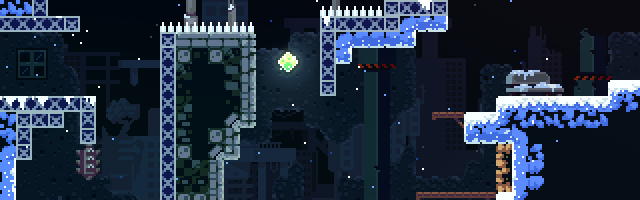
If AI-generated voice acting becomes the staple of the industry, we lose an element of design that has created plenty of memorable sounds that we've come to know and love. From Madeline's pouty sounds in Celeste to entire languages to convey tone without a single line of voice acting.
Music and Sound Design

Game: God of War (2018)
To keep it topical, it's time we tackle the element of music and sound design, which has become one of the most controversial topics ever since LLMs began tearing through industries. Recently, more games have announced their use of AI-generated music and sound design (though more often the former than the latter), and it's entered into an industry that is far from being part of the grey area that some of the other topics we've spoken about today: creative mediums.
Music is something brought forth from the minds of composers who bring worlds to life through sound design. Videogames have often been seen as an art form, and music has become an integral part that has elevated performances beyond the gameplay elements, turning them into immersive narrative experiences that even industry giants like Hollywood can't replicate.
Bringing back a topic we've spoken about before, but this is where the plagiarism machine is at its finest... or perhaps weakest. LLMs aren't composers, and no one who creates a song through a chatbot can be considered one, because none of the works of "art" are truly unique — with the lack of thinking and autonomy, chatbots can only regurgitate and reiterate, but never invent.

Game: Peglin
Music is far from one of the most integral parts of videogames, but it's undeniable that hard-hitting OSTs have stuck with many a gamer in the past, becoming part of daily life itself. My focus song is none other than Christopher Larkin's Path of Pain soundtrack, and the masterpiece created by Crashtroid for Peglin is truly something to behold, showcasing a form of creativity that LLMs can never mimic.
It's beyond the indie composers who have created masterpieces that have become integral parts of our daily lives, however. There's something to be said about the cinematic masterpieces that the audio-visual design created by developers has made, making moments that are — for all intents and purposes — epics in their own regards and elevating them beyond what they were meant to be.
God of War (2018), Celeste, and DARK SOULS III are but three additional examples to add to the previous ones, as the integration of music truly creates the atmosphere for the entire scene. I've splurged on audiophile-grade headphones to enjoy the masterpieces at their greatest, out of the sheer respect and love that I have for the composers who created the many tracks that line my heart to this day.

Game: Celeste
LLMs will never be able to replicate the same level of expertise shown by the greatest composers, yet, insultingly, they'll mimic it. Instead of creating an entirely new soundtrack to share with the world, AI does what it does best: copying the works of those who have done it better, who have poured years into their craft to create truly magical experiences that last for mere minutes, yet reverberate for hours, and create something that is a cheap copy.
Unlike human inspiration, all AI can do is create a cheap recreation — it cannot build on success, it cannot learn from it. All it can do is recreate and reconstruct something that already exists, leeching off the hard work that others have done.
Art

Game: Hollow Knight
It's time to tackle the true villain of AI generation and the videogame industry: art. Perhaps this is the most complex of the bunch, though there's no grey area to be touched on here, and make no mistake: any use of AI for art is purely theft.
Ironically, the worst use case of all has become the most prominent throughout the industry, as companies and developers shamelessly tout their use of AI for videogame development. Art is a pivotal part of the videogame industry, and though coding may take a big chunk of the development, art is what you truly take away from the experience.
On the other side, it's what stands out the most — the audio-visual element. Art is what sets the theme, it's what creates the aesthetic, it's what decides what parts of the world we remember and what we take from the whole experience.

Game: Grimoire Groves
Starting from the very bottom, however, is when companies use the excuse of iteration being at the forefront of every form of art. Humans, since art has existed, have looked for reference art to iterate and build upon, and those defending art have used it as the primary ammunition against those who abhor it: if humans can build upon something, why shouldn't LLMs?
One of the common uses for AI generation in art has been for concept art (a job entirely stolen by AI, by the way), which kicks things off on the wrong foot. Now, it goes beyond the whole "AI is bad" argument, because it transcends just morality — there is nothing morally good about using LLMs for art.
As stated before, AI cannot create, think, or reason, and it'll never create something unique. Yes, some of the images that models have created can be truly breathtaking, but they've been built from the hard work and dedication of other artists who have honed their craft and style for years, and all AI can do is imitate what they've done.

Game: Ori and the Blind Forest
The why might be confusing to some, and it's an understandable point of confusion. Why shouldn't AI create something new from something old and use it to create something that comes from the mind of a person? And the answer is actually rather simple: because AI can't create.
Entire art styles, genres, and more have evolved from the iteration and creativity of humanity, as we've evolved from mere platformers to collect-a-thons, from adventure titles to RPGs, from linear experiences to open worlds. Time and again, we've iterated and reiterated on the greats to create something truly unique, and the very essence of human nature is to imitate, learn, and improve, which is what has brought masterpieces to life and birthed new creations even years — decades, centuries, and beyond — after the creation of "art".
The "why" lands in the fact that there is nothing wrong with iterating — there is something wrong with copying. Stardew Valley wouldn't exist without the influence of Harvest Moon, and the prominence of the farming simulation genre wouldn't survive without Stardew Valley, but to iterate, creators must seek to improve upon what was made prior, not recreate it or imitate.

Game: Ratchet & Clank: Rift Apart
And therein lies the problem of AI generation: it cannot iterate. When concept art and assets are created from LLMs, they are simply ripped from one of the — frankly — millions of pieces of artwork that existed in the world by the time training took place. None of the chatbots are building upon what's been made, but instead copying it, adding nothing new of value to the source and output alike.
A common scapegoat used by companies and developers is to say that no AI made it to the final product — that everything was "refined" to fit the final vision of the experience. But refining upon a built piece of artwork is plagiarising something that's been made by someone already, and only fixing the errors that LLMs make because they can't see the work they're trying to imitate.
Refining an image is, essentially, copying a character model and slightly changing its art style. AI is built upon the very hard work of creators who made content, and the law wasn't quick enough to catch up to the plagiarism before it was so widespread that it was unstoppable.

Game: Kena: Bridge of Spirits
Losing the human element in art means losing iteration and building upon the greats that have come before. With LLMs copying everything that exists in the world, unique art will slowly fade into obscurity, as videogamers will lose the graphical fidelity and hard work of those who devoted their lives to the very craft.
When a prompt is all that's needed to create an asset, we lose out on the creativity that brought us The Legend of Zelda: Wind Waker, we lose out on unique workarounds to real-life limitations that become industry staples, and we lose out on the human element that makes videogames truly unique and bespoke. When AI means that anyone can become a developer, it means that no one can become a developer, because the sheer love, dedication, and passion that brought forth so many masterpieces we know today are overwritten by a machine that can create slop at the typing of a prompt.

GameGrin are proud to have all their articles researched, written, and edited by real people that care about gaming.


COMMENTS