
Blightstone Preview
Roguelites entice me into engaging with genres I typically don’t spend much time with. There’s an inherent pick-up-and-play model with many of these games that don’t seem to rely on quite as much legacy knowledge of each genre as a more traditional one can. Blightstone fits this mould perfectly; it’s a turn-based strategy title, with a heavy focus on the environments being a part of the game, rather than simply the battleground.
There’s not much necessary context here either. You play as a group of warriors enlisted by a man named Xander, who has the power to manipulate time. The Earthglass Crystal needs to be delivered to the Infernal Rift to save the world from an impending calamity. It’s a simple story, and it’s inherently not all that engaging. It’s not awful, the dialogue is fine, and the writing itself is decent; it did make me chuckle a few times, but it’s not the star of the show.

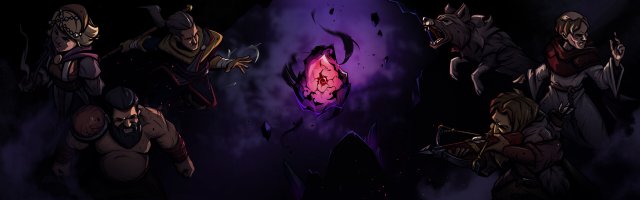
The gameplay is really where it shines, with some genuinely fantastic systems. You control a party of three characters, alongside the Earthglass crystal itself, in a typical turn-based system. The Crystal functions as the heart of your team: if it dies, the run dies with it. It’s also a contributing member of the party, with its own abilities and supporting passives. It also can’t move (but it can be moved), which makes it a bit of a pain to defend. I do like this system, though, as it helps to support a creative gameplay loop.
Different party members have their own unique abilities and specialities. Each ability has an Action Point cost, determining how many actions the character can take per turn, and some even cost resources. This extends to movement, too, so every decision you make comes at a cost, which makes planning ahead imperative to your success. And I mean that whole-heartedly… Blightstone is a tough game: deaths are frequent, and progression is slow but not insignificant.
Despite the limited five-character roster, they all feel interesting in their own ways, however, there were some issues with balancing, and it comes down to one of Blightstone’s core systems. The environments play a huge role, so any form of environmental manipulation, be it Telekinesis, creating obstacles, or even being able to throw objects directly, felt inherently so much stronger than any of the more direct interactions. Characters with more limited ability to do this aren’t bad, but I did find myself avoiding using them, as the results were typically far less impactful.

After a few encounters on the map, you’ll reach nighttime and need to camp. Camping is its own little challenge, as this is where you can heal up and gain some substantial buffs. None of these are free, though, costing both resources and AP, which is limited per night. So deciding what is worth spending on every night can be a challenge. Each night, you’ll also gain a little blight, which builds up per character and at certain points will cause you to gain debuffs, so making sure this is managed is just as important.
While I do enjoy Blightstone, its level of challenge might not be for everyone, and I do have my own issues with that aspect. Losing a character or simply taking too much damage at a certain point can feel like the run is already lost. I can’t say that comebacks aren’t possible, but certain situations can feel pretty frustrating to deal with, and make the latter parts of a run drag since you already know the end is coming.
The ability to recruit characters to replace those you’ve lost is incredibly expensive and feels more like dragging out your death than a final push for victory. This ties into the progression of the run itself, where you’ll gain levels and equipment for your heroes, neither of which is too strong. These systems prevent the very common roguelite situation where you’ll spiral out of control, but also can make each run feel pretty similar, scraping your way through every time.

During a run you’ll earn XP for the crystal, alongside Strands of Time, each of which serve as your main forms of meta-progression. The crystal gains new runes, giving passive benefits, while the Strands of Time are spent within the Continuum Forge to unlock other passive buffs. My biggest issue with both of these systems is the general lack of variety. You have a choice between one of three Foundation Runes, which unlocks a three-tiered skill tree with two runes per tier. Early on, this system is incredibly limited, and gives more of an illusion of choice than anything else, as the runes in the tree sometimes boost one of the other foundation rune effects, which you can’t select alongside the first until a higher level of the Crystal, meaning you oftentimes have the choice between either an underwhelming ability, or one that simply doesn’t function yet (that you can’t even select).
The Continuum Forge is much better in one aspect, yet it still lacks meaningful decisions. There are some interesting systemic unlocks with the Forge, but the way the costs are organised means you’re never really choosing between more than one or two options.
Variety is the core issue with Blightstone right now, with only a couple of bosses and minibosses in the game, and fighting against these gets tiring quickly. There is a solid-looking roadmap, though, with new playable characters, bosses, minibosses, game modes, items, and even a new enemy faction entirely.
Blightstone currently has a genuinely fantastic core, but it really just needs some fleshing out to find its place in the gaming world currently.




COMMENTS