
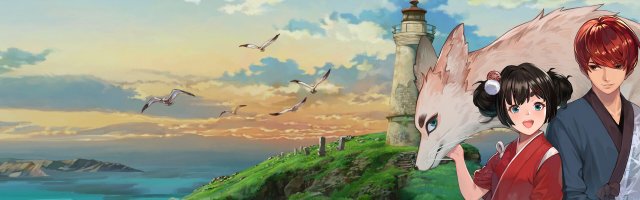
Developer Interview: Tales of Seikyu
During one of the last Steam Next Fests, I had the pleasure of trying out a little bit of Tales of Seikyu, an Early Access life and farming simulator that's being developed by ACE Entertainment and published by Fireshine Games.Whilst I do enjoy the genre, what originally got my attention was the uniqueness and nuances of the title. In it, players embody a yōkai who can transform into different animals, opening room for there to be a lot more action and adventure than usual.
I'm pleased to present the interview I had with the team about the game! A big thank you to them for the opportunity.
Editor's note: light changes have been made throughout the article regarding grammatical and regional corrections, alongside diacritic updates for accuracy in romanisation (giving back yōkai its long vowel — you're welcome, yōkai lovers!).
Please, feel free to introduce yourselves to our community!
Hello! We're the team behind Tales of Seikyu, a passionate group of indie developers from ACE Entertainment. You might know us from our previous title, Candy Disaster, a 3D trap-style tower defence game. Our journey began in 2019, driven by a shared love for folklore, cosy games, and immersive storytelling. Over the past five years, we've poured our hearts into crafting a world where players can experience the magic of [yōkai] culture intertwined with the joys of farming and community life.
One of the aspects that makes Tales of Seikyu stand out is the fact that you're playing as yōkai; could you tell me more about how this idea came to be?
The inspiration came from our fascination with yōkai — supernatural beings from Japanese folklore. We wanted to flip the traditional narrative by allowing players to step into the shoes (or paws!) of these creatures. This perspective offers a fresh take on the [life simulation] genre, where players can explore the world through the eyes of beings often misunderstood in myths.
There's a fantastically wide variation in the dateable NPCs! How did the team go about keeping this fresh and inviting to as many players as possible?
Diversity and depth were our guiding principles. Each NPC in Seikyu has [a] rich backstory, a unique personality, and a personal growth arc. We drew inspiration from various cultures and folklore, ensuring that players from all walks of life could find characters they resonate with. Our goal was to create meaningful relationships that go beyond surface-level interactions.

In life simulators like these, it's important to keep the gameplay fresh, especially between the farming and fighting aspects. What can you tell me about Tales of Seikyu's approach to this?
We've integrated transformation mechanics that allow players to assume different yokai forms, each with unique abilities. For instance, transforming into a Tengu lets you soar through the skies, while becoming a Slime enables you to navigate underwater areas. These transformations not only diversify exploration and combat but also tie back into farming, such as using specific forms to access rare resources or tend to unique crops.
The game's going to release to Early Access; what can you tell us about that decision in terms of why players should join the journey to help the game become a full experience?
Early Access is our way of inviting the community into the development process. We believe that player feedback is invaluable in refining gameplay mechanics, balancing systems, and expanding content. By joining us early, players can help shape Seikyu's evolution, ensuring it becomes a world that truly resonates with its inhabitants.
There are a lot of nuanced aspects to Tales of Seikyu, so can you tell us about what other games inspired it?
Certainly! Our farming and relationship systems were inspired by Stardew Valley and Harvest Moon. I am a huge fan of Kirby, which is why transformation has always been a core part of the game's identity. As for storytelling, we drew heavily from RPGs like The Legend of Zelda, The Witcher 3, and Baldur's Gate 3, aiming to create a rich and immersive narrative experience.
What's been the biggest challenge throughout the development thus far?
The biggest challenge has been striking the right balance between RPG elements and cosy life simulation gameplay. We want Seikyu to feel special, somewhere you can experience rich stories and gain deeper insight into yōkai society. At the same time, we don't want it to feel like a CRPG where you're constantly worried the world will end if you don't go save it right away.

It's quite common for players to end up asking for co-op to be added; will this be a feature the team has considered in any way?
Yes, co-op is something we've definitely considered, it's one of the most requested features from our community. That said, implementing it is a massive undertaking, especially for a small indie team like ours. We're currently focusing all our efforts on delivering a rich single-player experience first.
What has been the most fun aspect encountered throughout the development so far?
The most fun part has probably been the team discussions around designing romanceable characters, figuring out what kind of yokai they are, why they came to [the island], what they like, and what makes them charming or lovable. Creating these characters naturally led us to expand the world-building of Seikyu itself. We truly hope to keep growing this universe and continue the series for a long time.
For those of us who know little about game development, what sneak peek behind the scenes could you give us about the hardships, nuances, and fun aspects of creating a life simulator like Tales of Seikyu?
When I played Persona 5 Royal and met Yusuke Kitagawa, I was honestly amazed. It's rare to see real-world art forms integrated so meaningfully into an RPG. Around that time, we were also creating the character Liliana, and we wanted to respectfully represent a traditional art form and help more people learn about Japanese rock painting.
That's when we met Miwa, a Nihonga (Japanese-style mineral pigment) painter. Through our interviews with her, we gained insights into the techniques behind the art and the personalities of artists who devote themselves to it. We licensed a series of her past works, which became the foundation for Liliana's Heart Events. Our hope is that players can truly feel what it's like to fall in love with a Japanese Rock painter (Yoni, the singer character, was created in a similar way. She started out as a sweet lounge singer with big dreams.).

Considering the game features yōkai and seems to be set in Japan, what sort of research has the team done, and have they learned anything surprising or fun during the search?
Of course! We travelled to many regions across Japan to conduct on-site research, diving deep into local folklore and yōkai traditions. Interestingly, one of the early inspirations for Seikyu's cultural design came from Spirited Away. In that story, Yubaba is essentially a Western-style witch, yet she runs a very traditional Japanese bathhouse. That blend of cultures really fascinated us.
So, while Seikyu is rooted in Japanese yōkai culture, we've intentionally woven in creatures from Chinese and Western folklore as well. For example, we're currently working on a vampire character who wears traditional wooden geta sandals and is accompanied by a kasa-obake (umbrella yōkai) who shields him from the sun, reimagining a Western myth through an Eastern lens.
Another example is the tengu, traditionally portrayed as a stern, male mountain spirit. In Seikyu, we wanted to subvert that expectation by introducing a female daitengu character, adding a fresh and unexpected take on a classic yōkai.
Bonus Questions!
If your family were a clan, what would their animal be?
Yuchen Wang: A fox, undoubtedly. Foxes are clever, adaptable, and deeply rooted in folklore — qualities we admire and strive to embody in our creative endeavours.
Klaus Zheng: Probably cats. I have two of them, and they always look for each other in important moments, yet still maintain their independence. My father and I don't talk much directly — there used to be a sense of distance between us, and I used to think that was a bad thing. But as I've grown older, I've come to see it differently. It feels more like a quiet understanding between us, because deep down, we both look out for each other.
What would be your favourite yokai ability, and why?
Klaus Zheng: The tengu is my favourite yokai transformation. I often dream about flying at night, and whenever I play a game, I tend to choose faster-moving characters or weapons.




COMMENTS