
Our Adventurer Guild Review
Developed by GreenGuy and published on Xbox consoles by Ultimate Games S.A., Our Adventurer Guild is one of the more in-depth strategy titles I’ve had the pleasure to play. I tend to prefer simpler fare, but managing this guild held my attention for a time. The game may not be quite my thing, but I imagine it would be much more appealing to those with a deeper love of strategy and base-building games; Our Adventurer Guild is more than competent.
For me, the game’s greatest strength is its character writing — for example, the nameable protagonist of humorously unclear gender feels like a part of the world with their own history and notions, of which none are clearer than their deep-seated hatred for Fiola, the widow of the prior guildmaster our protagonist has been sent to replace. The protagonist and Fiola had been close to the man, yet now they cannot help but snipe at each other at every possible moment, much to the chagrin of everyone around them. This dynamic could get old fast, but the bad blood between them feels realistic and consistently hilarious, always reaching new heights of delightfully casual pettiness.
Notably, most of the characters that are allowed to be fleshed-out, full-fledged characters are the various vendors and trainers around the titular adventurer guild who can sell you equipment or train the adventurers for a pretty penny. They’re great fun and act as a consistent set of weirdos to return to between missions and expand as the story moves forward; however, the actual adventurers you use in battle get the short end of the stick. Oh, the pre-generated characters have interesting backstories written up and cool personality quirks that have an impact on the gameplay, but like many strategy game units, they’re expendable and not given narrative or character focus.

This isn’t a bad thing, mind you, especially as the adventurers are also freely customisable in appearance; tying them down to set characterisation could get in the way of that. Sadly, that customisation also keeps the adventurers from having particularly strong designs in the way that something like Darkest Dungeon can. Each class has its own outfit and selection of skills, but the clothes just feel like basic fantasy fare and the skills, while useful, have a lot of overlap — there’s little to make you feel attached to the adventurers.
That may be for the best, however: you are going to need to have a lot of adventurers. Even if you manage to avoid losing anyone, your adventurers are going to need to take a lot of rest between missions and go on many other assignments you don’t oversee, even from the beginning. This helps get across the feeling of managing a massive guild, but that doesn’t make it not stressful.
For most normal missions, you take along a group of four units (later on, up to six), explore a map, get into some tough battles, and get out of there. Once you’re back at the base, those adventurers gain injuries and morale modifiers, both positive and negative; all of these can take a while to heal or dissipate — for injuries that are bad enough, think roughly 10 missions, not two. There are ways to heal them faster at the church, but it’s an unpleasant experience and bad for morale. You want to go into fights with high morale and as few injuries as possible, so you’ll need a large, rotating cast of characters so you always have someone for the job. This is a way to combat players who try to go all in on a single team of units, but it often left me stressed out over needing to wait ages for adventurers that seemed to be barely injured to get better.

Going on missions is more fun in the moment, with your set team walking around a map on a grid with little meeples representing you, roaming enemies, and various items to find. There are frequent stopping points where they run into a situation and you must choose the best way to deal with it, usually resulting in a die roll using whichever character has the best stats.
There are also plenty of turn-based fights to jump into through some choices or by walking into an enemy. You command your fearsome foursome (or moresome) against some assorted enemy units in a small, detailed field, with turn order determined by the units’ stats. The battles move slowly, requiring you to think before you charge in. It can be difficult to avoid damage in these encounters, especially as your foes will start out hitting about as hard as you can, but there are places around the field you can heal a little for free on your turns.
At the start, your adventurers can pretty much only do one notable thing each turn, so you have to be careful not to overextend and take unnecessary damage, but you also have Bravery Points to spend: units get more through landing crits and can lose them by taking too much damage. These can be spent in a pinch to turn the tide of battle, whether that means tacking on extra action points or increasing your accuracy, though BP also gives them buffs when they have a lot of them and debuffs when they have few of them, and it can also be the difference between surviving a lethal blow or perishing. It’s a great way to seal victory quickly instead of risking damage that will take your adventurer ages to heal or to save your units from certain defeat.

At its best, the combat makes you feel like a wise tactician managing your small team around to deal with your foes with frightening efficiency. However, most of the abilities at your disposal don’t start out terribly exciting or unique; you’re usually going to be looking for whichever move just has the best damage or range. There are some abilities that let you push enemies to deal extra damage when they collide with each other or walls, so good positioning is fun to set up, but beyond that, I didn’t see any reason to switch from the best options and just try to focus on one enemy at a time.
I imagine later moves will provide fun status effects to work with and later environments will have more to interact with, but I couldn’t be bothered to stick with Our Adventurer Guild to get to them. The battles are functional and stressful, but the harsh penalties to taking damage make the middling rewards of some experience and a few items not seem worth it, and the fun I did have didn’t stick around. Likely, those who enjoy messing with these systems will find more to love, but I couldn’t.
I have mixed feelings about the overall presentation as well. There’s not much to say about the pleasant, adventure-y music, but that’s not the case for the art. I don’t want to trash the anime-inspired style, but it certainly looks amateurish — not necessarily bad, as every unique character has a lot of clear personality shining through and great poses to boot, but it’s hard not to look at this and think of a webcomic in its early years.

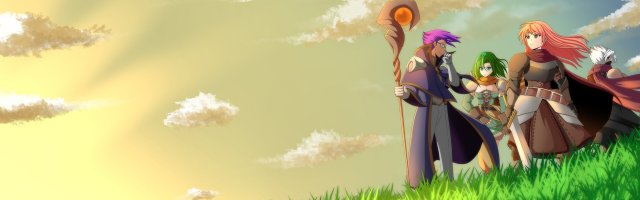
Like with the writing, the best art in Our Adventurer Guild comes between the missions, whether with the unique characters’ designs or the loading screens. I love the loading screen art showing assorted adventurers out doing whatever and showing off their personalities, but seeing this style on the actual characterless units doesn’t do much for me. There is some charm to the art direction and it never comes across as plainly bad or inconsistent, but I can’t help feeling picky.
One small note I don’t feel conflicted over is the UI. Oh, it’s crisp, clean, and legible, so long as it’s on screen. However, elements around the edge of the screen tend to get cut off, even if you lower the UI size in the options. Notably, you can’t actually change the settings either? You’ll get a preview of what you’re selecting, and there’s an apply button, but once you leave the menu, everything reverts back to default settings.
Overall, there’s a lot to like with Our Adventurer Guild; the passion comes through with detailed gameplay, character writing, and purposeful art design. However, experiencing the main gameplay loop moment-to-moment is stressful at best and boring at worst. I love what I see, but there’s a lot between the things I like that I just don’t care much about, and it’s hard to keep up my excitement when I just don’t enjoy the basic gameplay. This could make for a great experience for anyone willing to sink days into a strategy game, but I am not that person.
Our Adventurer Guild (Reviewed on Xbox One)
The game is average, with an even mix of positives and negatives.
There’s great writing and a lot to do, but if you don’t already love turn-based strategy, this isn’t going to get you into it.

GameGrin are proud to have all their articles researched, written, and edited by real people that care about gaming.



COMMENTS