

Pokémon Deserves a Classic Collection
Today, the 27th of February, marks the 30th anniversary of the Pokémon franchise. For as long as I can remember, the series has been there; I have many fond memories of playing the games and watching the anime with friends and family, but it’s now a franchise that a lot of people don’t really have the same level of respect for. It’s become a series that’s held in such high regard by nostalgic fans that a lot of the newer games just seem worse. I have to admit, I’ve struggled with keeping my attention on more recent entries, and it doesn’t help that many fans just have no way of legally acquiring the older titles.
In this article, I’m not going to say that the newer Pokémon titles are terrible. They may not have held my attention, but that doesn’t mean they’re inherently bad. It’s just… perhaps I’ve just outgrown the formula. Instead, I want to focus on the way that Nintendo could bring back older fans, while also still ushering in younger fans who have no way of playing the classics. In this case, I’m going to refer to the classics as those on Game Boy, Game Boy Color, and Game Boy Advance. First, let’s just go back to the beginning.

30 years ago, Pokémon Red and Pokémon Green were released in Japan. However, Pokémon Green was only ever released in said country, and many international players could only get a copy via emulation or by purchasing one online (or hoping they had an uncle who happened to work in Japan). Pokémon Blue would be released in Japan on 15th October of the same year, and Pokémon Yellow would follow after them in 1998 with a story that would more closely resemble the anime.
When Red and Green were released internationally, Green was changed to Blue, and they were reprogrammed for an international release. Initially, Nintendo of America actually wanted them to redesign the Pokémon for an American audience, but thankfully, they didn’t, otherwise we’d have a ridiculously muscular or edgy Pikachu. With that, the series became a cultural phenomenon, with critics and users alike appreciating the challenge of catching all 151 Pokémon and defeating the Elite Four and Team Rocket alike. The fact that you could trade with friends using the Link Cable to get game exclusives was a brilliant touch and was an element that they would continue to use into the present day.

Afterwards, Pokémon Yellow was released at around the same time as Pokémon: The First Movie, having started development after the Japanese release of Pokémon Blue, which allowed you to start with Pikachu instead of the usual starters of Bulbasaur, Charmander, or Squirtle, and your rival beginning with an Eevee. You could obtain the other starters if you accomplished certain tasks and maintained a good relationship with your Pikachu. It had a massive promotion around the game, with a special edition yellow Game Boy Color being released, too.
I have to admit, Yellow was technically my first game, and therefore holds a special place in my heart — some would say that I obtained the game through ill-gotten means, but personally, my brother should have known better than to hand it to a toddler who didn’t understand that save had different meanings (I thought I was saving the game from Team Rocket, and thus, was doing a good deed) — and also for many others. Like Red and Blue, it had great reviews, and so it would come as no surprise that fans were even more excited for the release of Pokémon Gold and Pokémon Silver on 21st November, 1999.

While Red, Blue, and Yellow introduced numerous fans to the series, Silver and Gold are regarded as some of the best games in the franchise. Leaving Kanto to travel the Johto region, Professor Elm sends the player to deliver an egg to his colleague. It introduced the breeding mechanic and your Pokémon could even hold items, including the brand-new berries, but most importantly, it brought in the PokéGear, which allowed trainers to challenge you to a rematch, amongst many other things. But the best part of the game? You could travel to Mt. Silver, where you could battle the previous protagonist, Red, who would be the most difficult final battle for those eager for a challenge.
A year later, in December 2000, Pokémon Crystal was released with further additions, such as the Battle Tower. Not only that, but you could also choose a female protagonist (Kris), though it was otherwise not as popular as Silver and Gold. While it did add another legendary dog in the form of Suicune, it didn’t have as much further content that really justified anyone buying it. This, of course, didn’t stop it from being the first game that was officially mine, though, as my brother had owned both of the previous Johto titles.

Several spin-offs had also been released during this time, such as Pokémon Stadium, Pokémon Pinball, Pokémon Snap, Pokémon Puzzle Challenge, and Pokémon Trading Card Game. But of course, while fans were still excited about them, it was always the mainline titles that generated the most buzz. So, it would come as no surprise that there was even more excitement when Pokémon Ruby and Pokémon Sapphire were released on 21st November, 2002.
The third generation introduced more Pokémon to catch, but it also introduced several fun new aspects, such as hidden bases and contests. There were even two-on-two battles, bringing in a new way of fighting that hadn’t been seen before. It was these games that truly solidified my love for the series, as I was finally old enough to really understand battles, despite having played the previous generations. They continued to bring in a female protagonist to choose alongside a male one, and with the 2004 release of Pokémon Emerald, they had also introduced the Battle Frontier.
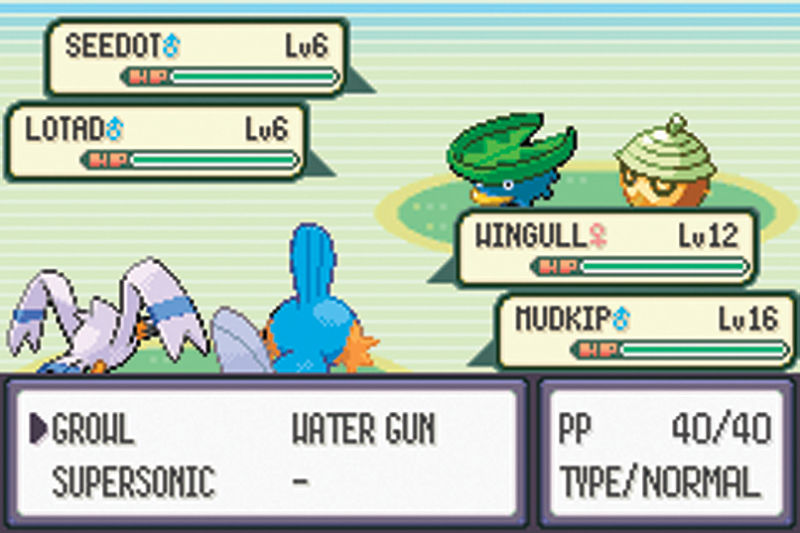
While I would like to discuss some of the later games, it’s these generations that I want to discuss. We know that they’re not above remakes, as 2004 also highlighted the release of Pokémon FireRed and Pokémon LeafGreen. These introduced a new wireless adapter from Nintendo, and the trade function was even backwards compatible with the other third-generation games. Those who were too young to really appreciate the original Kanto titles could immerse themselves, and it’s why even these two are held with the same level of nostalgia as the originals.
I’m not saying that we need remakes of any of these games. After all, we’ve returned to them before, with other releases such as Pokémon HeartGold and Pokémon SoulSilver on the Nintendo DS in 2009. We even had Pokémon Omega Ruby and Pokémon Alpha Sapphire on the Nintendo 3DS in 2014. The first generation has got even more love with the release of Pokémon Let’s Go, Pikachu! and Pokémon Let’s Go, Eevee! on the Nintendo Switch in 2018. However, these were remakes of Pokémon Yellow, and while still favourable with critics, these titles were still mixed, with a user score of 6.4 for both Let’s Go! titles on Metacritic. Notably, I wanted to include the user score as I felt that these were more authentic to how the players felt themselves.

We know that Nintendo can release older titles. With the Nintendo Switch Online Expansion, players can access games on the Nintendo 64, Sega Genesis, Game Boy, and Game Boy Advance. While Nintendo Switch 2 players have further access to the Nintendo GameCube, other Pokémon titles, such as Pokémon Stadium and Pokémon Snap, as well as Pokémon Puzzle League, are already on the Expansion Pass. Furthermore, Pokémon Yellow, Red, and Blue were all released on the Nintendo 3DS online store in 2016, allowing users to access these titles legally for the first time in years.
That is, until the Nintendo 3DS online store shut down in 2024, meaning that the first-generation games could no longer be purchased. Already, this was a massive blow, as they were far more affordable than purchasing a second-hand copy. If I were to look at the UK retailer, CeX, Pokémon Red costs £35 without the box. If you want a copy with the box? Well, that’ll be £110. But first, you’d need to buy a console. Original Game Boys on CeX cost £85, while a Game Boy Color is around £75; the same can also be said for a Game Boy Advance SP. Pokémon Yellow is £40 without the box, and £160 in the box; likewise, Pokémon Blue is £32 unboxed, and £125 with the box.

Pokémon Gold and Pokémon Silver are all at the same price point, but if you want to try out HeartGold or SoulSilver? Well, you’re looking at between £125 and £235, depending on whether you want it with the PokéWalker. Surprisingly, the Game Boy Advance games are more expensive than the first and second generation games, costing £60 for an unboxed copy of Ruby or Sapphire and £75 for an unboxed LeafGreen or FireRed. Boxed editions vary between £150 and £210 for both of these titles, while Omega Ruby and Alpha Sapphire are £48, but the price of a Nintendo 3DS is at least £140.
Considering that we live in a never-ending cost-of-living crisis, it’s no surprise that players just want to revert to their nostalgic ways. As much as I’d love to purchase older consoles and older games, how can we justify it? Games are already an expensive hobby, and considering the older games are not on consoles and aren’t being produced, there’s no supply and demand. There’s limited stock, and of course, I can’t fault collectors who want to build their collections… but it means that it will only be a matter of time until stock dies out completely, making them even more expensive in the long run.

Instead, fans turn to emulators and ROMs, but there are even risks here. You need to find reliable websites, and we all know how much Nintendo hates those. Inevitably, these are only a temporary fix, and while I don’t condone piracy, does anyone have much of a choice? Nintendo needs to make it so that access to older games isn’t an impossible task. Other companies, such as SEGA and Capcom, release classic collections, so why can’t we get one for the first three generations of Pokémon?
With that, why not a collection of all the previous games? The DS titles have their own dedicated followings, and I’m fond of them too. However, I admit that right now, until we get a Nintendo DS element on the Nintendo Switch Online Expansion Pass, it’s unlikely. But fans could finally play games on their consoles. It could either be as a Switch cartridge (because we all know Nintendo does like to charge us all) or even on the Expansion Pass. These are all options, so why shouldn’t they release them?

It’s the 30th anniversary, and there’s never been a better time for them to do it. After all, if they want to prevent piracy, then they should just make it so that they’re more accessible to the public. And then they announced FireRed and LeafGreen. So, it seems like Nintendo is actually accepting of the fact that fans want these, but I stand by my point. While still reasonably expensive at £16.99 each, it’s not too surprising a price point considering Nintendo wants to make a profit out of the anniversary. With the addition of a Pokémon Direct also on today, who knows what else they may surprise us with?
Overall, it’s a step in the right direction, but a re-release of the other classic titles would still be good. Now excuse me as I go and play LeafGreen and embrace some nostalgia.

GameGrin are proud to have all their articles researched, written, and edited by real people that care about gaming.




COMMENTS